Work Text
In order to make art, we create an institution in the form of a position. And, on the other hand, it turns out that the very act of creating this institution and this position is already an act of art.
Conversation, 26 September 2024.
Work Text
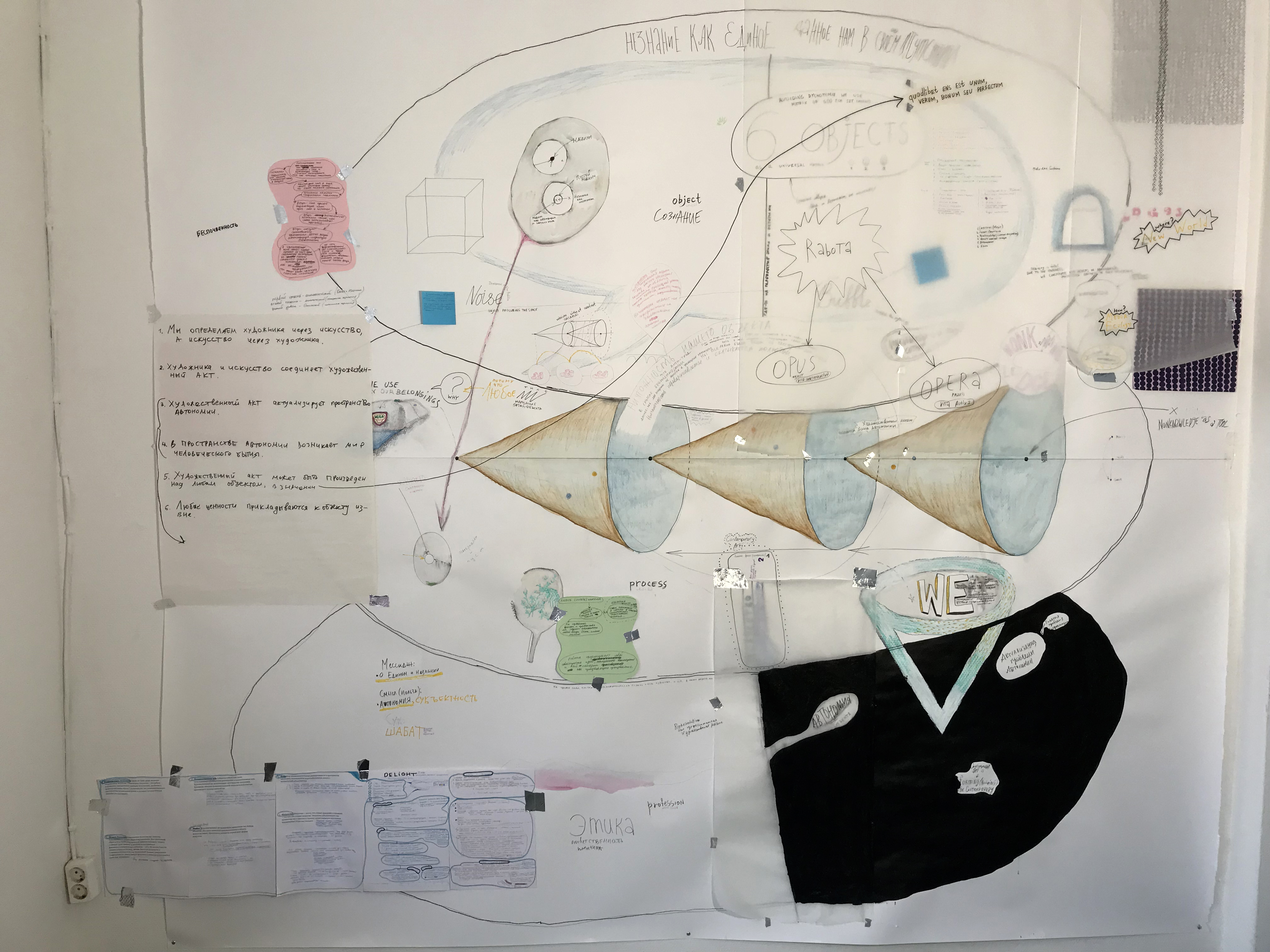
Absent Institution. We curate idleness. We are artists primarily interested in the question of what it even means to be an artist. We could say that an artist is someone who creates art, and art is what an artist creates, but such a definition simply raises another question: "What is art?" While this ambiguity could be entirely ignored in favor of practice, for us, it becomes a problem. This seemingly banal question irresistibly draws us into its vortex, forming the basis of our artistic identity. The word “artist” turns out to be tied to a radical question about oneself—an artist is someone who asks themselves what it means to be an artist and to act as one. However, to ask oneself this question, an external position is required—a vantage point from which one can observe oneself and inquire. Establishing such a separate working position and creating a mechanism for this reflexive practice is what we see as our practical artistic task.
Marika Krasina & Anton Kryvulia · former About statement.
History
Three groups, two people in each
On 28 April 2019, Marika and Anton discuss the organisation of their work as an Office of Nonknowledge.
— So our office stops being “about something”. — It becomes about itself. — About the working process. — About chance things. — About what is usually considered secondary.
Conversation, 28 April 2019.
Work Text
The formation of this practice implies a conceptual and theoretical articulation, which is why we develop our own language and grammar. They emerge directly from our lives, from the actual conditions and practices within our real existence. A new observer appears in our lives, transforming the search for perspective into a performative act—a kind of ritual.
Marika Krasina & Anton Kryvulia · former About statement.
History
In December, collages lie under the bed. They discuss who will select the material, who will think about it and who will show it to other people.
— Here are some of us who deal with Chaos, and others who invent this abstract concept (nothing practical there either). — That’s the Sense group. […] — The team that handles… let’s say, communication with the outside world, that handles rendering, rendering this whole thing. It puts things together. Puts everything together, organises, assembles. Puts exhibitions together, puts together… talks to people, you know… the way they need to be talked to. Because these ones here won’t talk to people the way people need; they’ll say, “Fuck off.” You see. The Chaos group will say, “Just fuck off, all of you; we simply don’t care.” Well… and this Sense group, you see, will talk to them about Samotryas, Divine Language, Nicholas of Cusa. And you see, no… everyone will just fall asleep, you see. And here there has to be a third group that will translate all this, you see, into some language of communicative messages, into the language of communication. And it will collect the material. So that makes three independent groups. — How many people are there in each? — Two… (They laugh.) — Six. — The Rabota group is six people.
Conversation, 23 December 2019; excerpts.
In January 2020, at the Serlachius residency in Mänttä, they set aside a room for the office. They install a television, listen to music and work with documents. They come in every day at eleven.
Work Text
Second, this work involves office labor, also conceived as a performative practice. This period of our work is called the “Office of Nonknowledge.” It is dedicated to processing expedition materials, transcribing dialogues, and preparing new exhibitions, publications, and events. The performative nature of the office work leads us to create an archive conceived as a work of art—in the end, a performative archive, or museum.
Marika Krasina & Anton Kryvulia · former About statement.
History
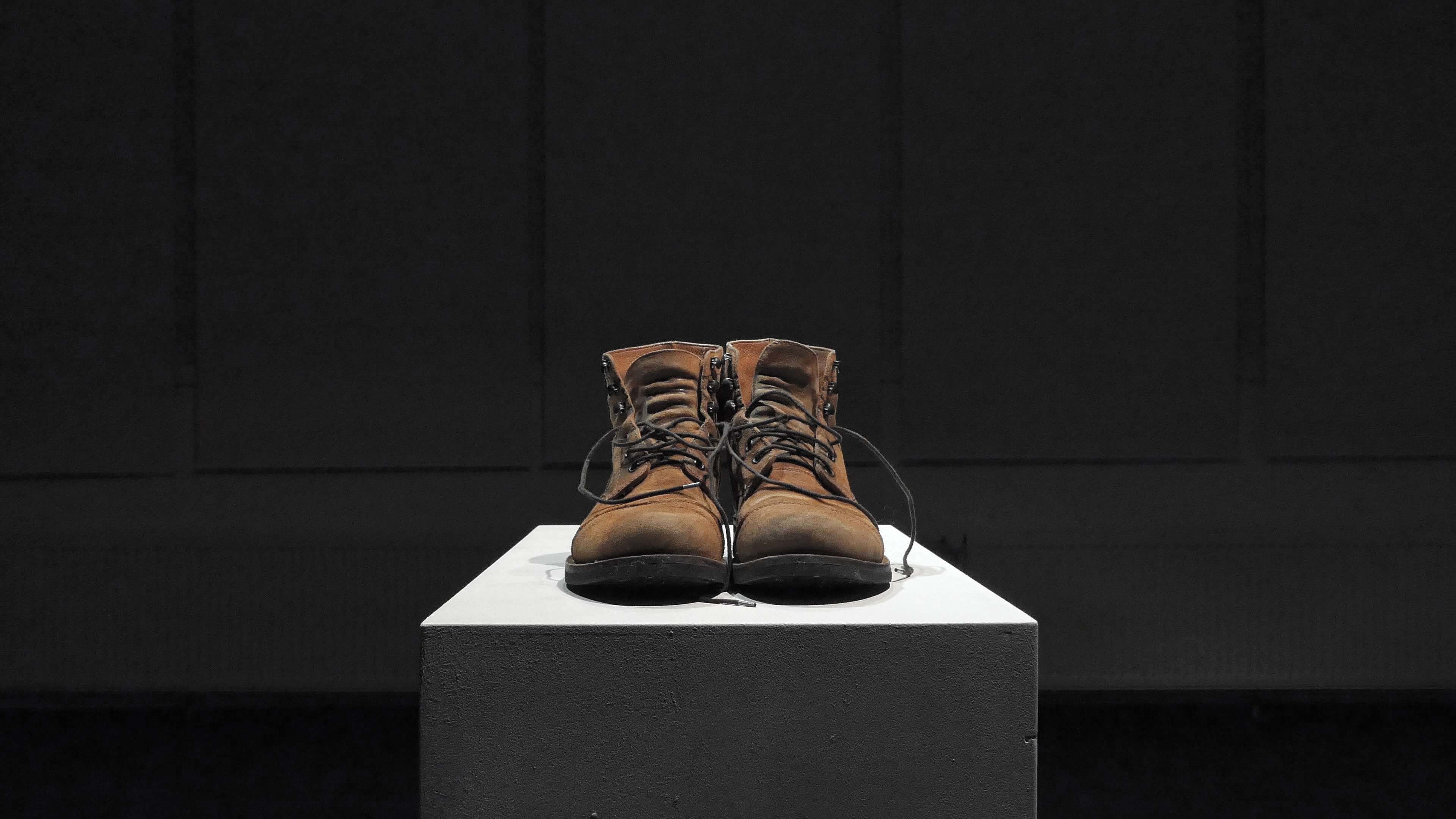
On 23 February, Anton’s boots stand on a white plinth beside a camera and a projection. The artists call the work Whatever: the boots occupy the place now; next time it could be something else.
Work Text
Our work is the documentation of this ritual of remembering ourselves. We construct a position and collect traces of connections and relationships in the form of rules. These rules are not created to be used as instructions; rather, they emerge naturally, as leges naturales, in the process itself. Since we work as a duo, we are forced to verbalize everything. Our work happens precisely in the moment of conversation, and these conversations leave traces. Over the years, these rules have taken shape as a model, a kind of institution that we enter like an empty house—to look at ourselves through the window.
Marika Krasina & Anton Kryvulia · former About statement.
Full reading →
Loading Six Dialogues about Place…
History
A letter needs a sender
On 19 December 2019, the proposal to give correspondence a common identity meets an objection:
I’d like us to be simpler about this — in communication. That is, when approaching people, in business, to approach them in our own names as artists, rather than as Rabota or our project. […] Communication shouldn’t turn into an art object. Otherwise it takes the form of a game, a kind of fake, and this isn’t a game — it’s a serious undertaking.
Conversation, 19 December 2019; excerpt.
In November 2020, they consider making contact with other institutions:
— For an artist to collaborate with an institution, you need a curator. But an institution can collaborate with an institution. — Well, logically, that’s how it is. Let’s just have some milk and watch another episode. You can open it.
Conversation, November 2020.
On 6 December, Rabota names the people who can arrive, make a phone call, do the work and sign the documents. Rabota Institution, Nonknowledge institution and recollection institution are among the names being tried.
— But we’re working as Rabota anyway. Nonknowledge institution is our project. — If we want to do without Nonknowledge institution, we’ll do without it. There’s no problem with that. — No, we have to plan for everything from the start. — We can work without Nonknowledge institution. If it’s a project, we can come up with another project.
Conversation, 6 December 2020.
A letter text addressed to Mraz in 2023 gives a more definite account:
In 2018, we created an Absent Institution, an organization for the study of practices and curatorial projects related to them.
Letter text addressed to Mraz, 2023.
It proposes a programme of performative lectures and exhibitions and asks for opportunities to publish documentation and research.
MUSEUM
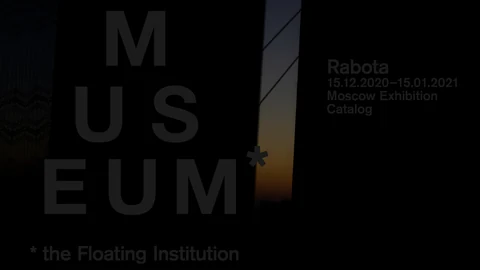
An exhibition is assembled in their Moscow apartment, announced for 15 December 2020–15 January 2021. Both artists contract COVID-19. Its catalogue records:
But the offline show was never opened — Marika and Anton both got the COVID-19. That is the unopened exhibition's catalog.
MUSEUM catalogue, December 2020.
The announcement of 31 December says:
We got sick with Covid-19 and now are locked on the 19th floor of a house on Rabochaya Street in Moscow. So as not to be a victim of circumstances, we have opened the exhibition where we are. No one, of course, will be able to come and see it live, but the exhibition is open and quite material: photographs, objects, and videos. In addition to the exhibition catalog, we created a parallel online exhibition that is closely intertwined with the material exhibition.
Marika Anton Rabota · announcement, 31 December 2020.
The catalogue contains fourteen entries: stones, a Fid, an inventory, photographs of belongings, a film and prints changed by underground storage. In a separate working introduction, the artists write:
We are resisting. We resist disease. We resist the desperate situation into which circumstances have thrown us. We resist isolation, the destruction of connections and the collapse of the interhuman space. We are opening up.
Marika Krasina and Anton Kryvulia · MUSEUM working introduction, undated.
Full Work →
Loading 201215 MUSEUM — Moscow Exhibition…
History
A room leaves as a list
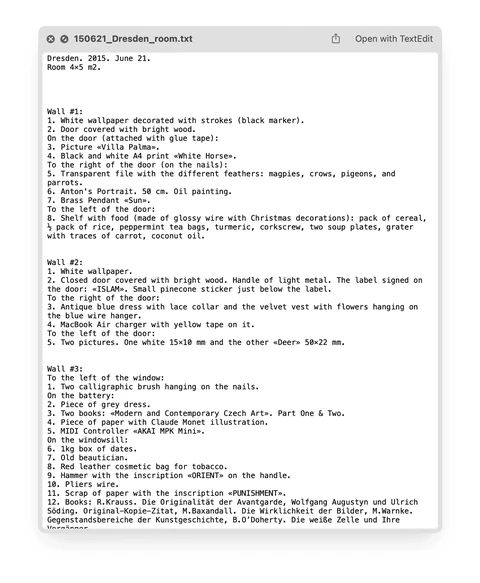
In Dresden on 21 June 2015, Marika and Anton list the contents of the room where they live and work.
Detail
History
The list moves from wall to wall, then to the floor, tables and things beneath them. Instruments, food, chargers, a birdcage, dictionaries and clothes appear together. Among the last entries on the metal table are two cups of black tea, a cutting board with a bitten wafer, a Russian-German-Russian dictionary and a MacBook Air with Ister on its screen. The things remain in the room.
In Politics of Nonknowledge, preserved under the year 2018, they write:
Our own revolution consists in excluding the production of a product and understanding our work of creatively thinking through and recreating the world and ourselves as daily unproductive labour, like the labour of a chimney sweep or a dishwasher, in a labour relation with society.
Marika Krasina and Anton Kryvulia · Politics of Nonknowledge.
We turn our things into an art object (Ready Made) and then return them to everyday use. Their life as art objects is momentary and solemn; they do not become a product, are not subjected to commodity alienation (Entfremdung).
Marika Krasina and Anton Kryvulia · Politics of Nonknowledge.
Work Text
We began working together in 2014 in a format of exploratory inquiry or drift. Over time, we realized that this work consists, first, of performative expeditions. Over nine years, there have been many such expeditions, which eventually became known as “Zones of Nonknowledge” (see The Tunnel). The Zones of Nonknowledge take the form of autonomous, borderland explorations, with their subject being an “Anthropology of Aliens”—examining ourselves as strangers in random situations.
Marika Krasina & Anton Kryvulia · former About statement.
The Absent Institution is a logical system with its own dynamics and concepts. This institution is both our artistic medium and artistic product. The Absent Institution produces itself. Its practice transforms the seemingly unproductive activities of artists into objects of audience experience and products of artistic exchange. It collects and archives the ongoing documentation of our daily lives—photos, videos, audio recordings, and artifacts. These materials form an extensive digital archive stored on a private server, as well as a material archive of artifacts. Both the digital and material objects serve as means to materialize the work of the Absent Institution in the form of books, magazines, websites, exhibitions, and lectures.
Marika Krasina & Anton Kryvulia · former About statement.
History
An organ of the academy
In January 2022, a proposal for HfBK Dresden describes “working in the institution as one of its organs”. Marika and Anton offer reports, recorded conversations and a platform connecting people across the academy. They propose listing the contents of the rector’s desk in Dresden, sending the list to Rome and assembling it there from local things.
We see our role as helping the academy to be a utopia. We are a little utopian wind. A breeze of utopia in the academy.
An Offer He Can’t Refuse, 24 January 2022.
The presentation asks for clear, functional communication while the artistic process remains unpredictable, imperfect and capable of producing rubbish. The proposal’s final conditions are practical: to do the work together, they need to live in Dresden. Could the academy or EU4ART employ Anton, or invite him as an artist?
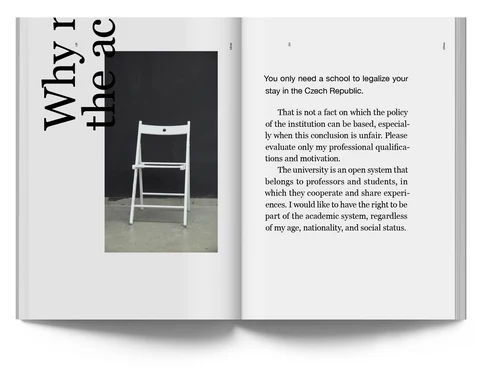
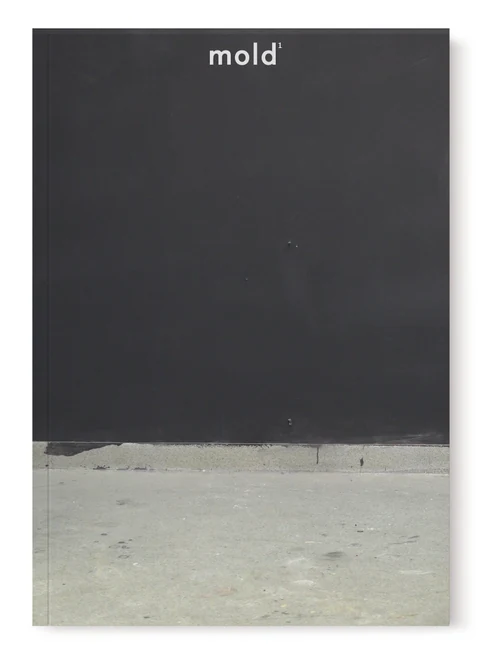
At another academy, the question concerns admission. After his entrance examination at UJEP in Ústí nad Labem, Anton submits an appeal. MOLD 1 publishes the appeal, Jiří Kovanda’s response and Anton’s replies.
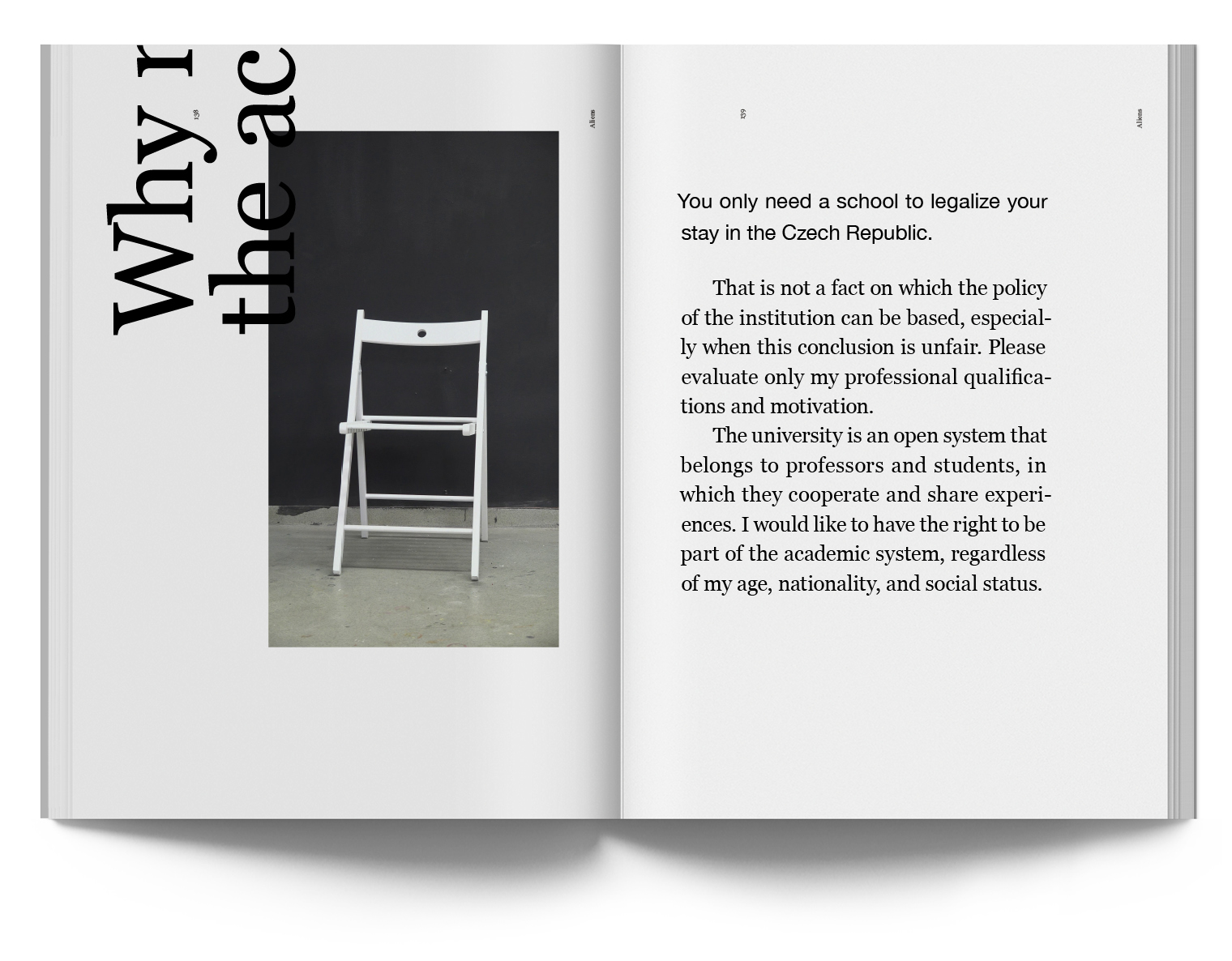
Yes, you are a good artist who has a clear focus, a strong thinking position and a lot of work done, you are educated and you have a good overview. You don’t really need learning, you could teach younger colleagues yourself. Unlike you, the other applicants are at the beginning of their journey, so they need school and our help much more. Proof of this was the admission procedure. You didn’t actually react to the assigned tasks at all, you just did your job well, but it seemed to be prepared in advance and you want to show it regardless of the assignment. That would confirm my assumption that you are already a mature artist and theorist. And that you would need a school more to legalize your stay in the Czech Republic. But the university cannot serve that.
Jiří Kovanda to Anton Kryvulia, February 2022; excerpt published in MOLD 1.
I’m studying all my life—I like it. However, in addition to learning, I also need constant discussion and an expert environment.
Anton Kryvulia · reply published in MOLD 1.
Detail
History
That is not a fact on which the policy of the institution can be based, especially when this conclusion is unfair. Please evaluate only my professional qualifications and motivation. The university is an open system that belongs to professors and students, in which they cooperate and share experiences. I would like to have the right to be part of the academic system, regardless of my age, nationality, and social status.
Anton Kryvulia · reply published in MOLD 1.
The response from the UJEP to my appeal was negative.
Anton Kryvulia · MOLD 1.
Detail
History
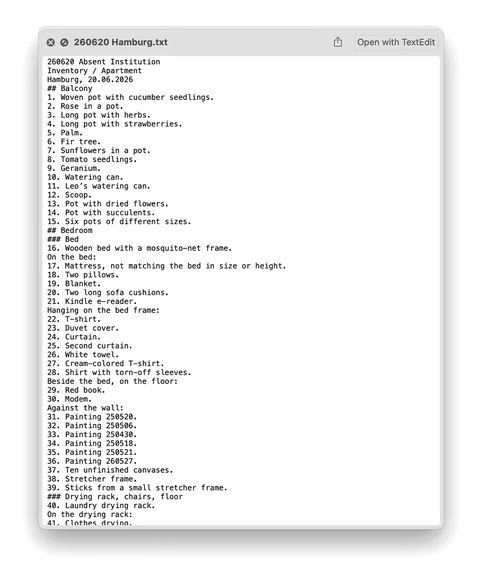
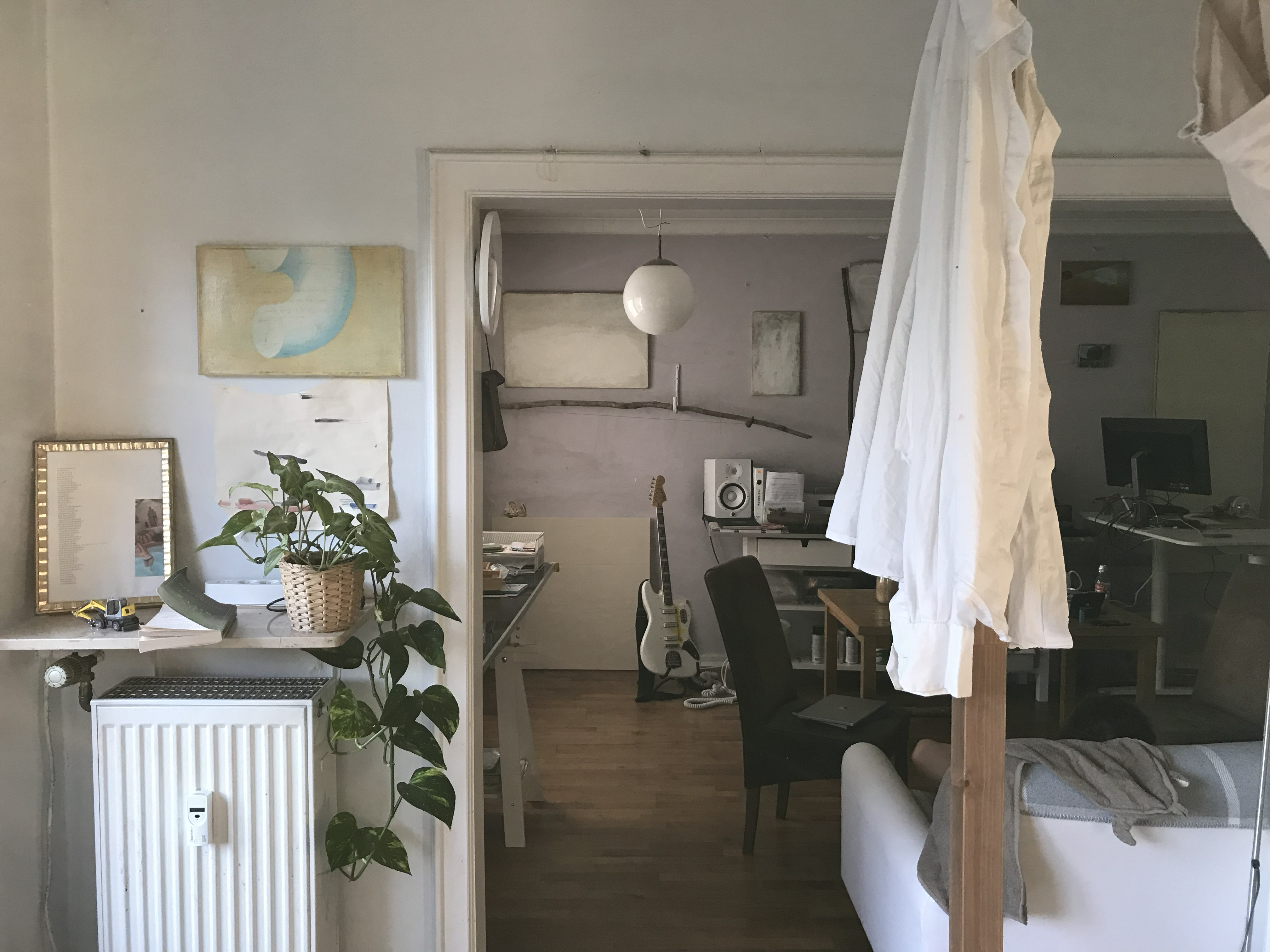
From 20 June to 5 July 2026, Marika and Anton’s home in Hamburg-Othmarschen is an apartment exhibition. In their account, they open the door, invite visitors into the studio, sit at the table and have tea. Photographs of earlier works, recordings and sound objects enter the conversation. The kitchen, studio and child’s room continue to be used.
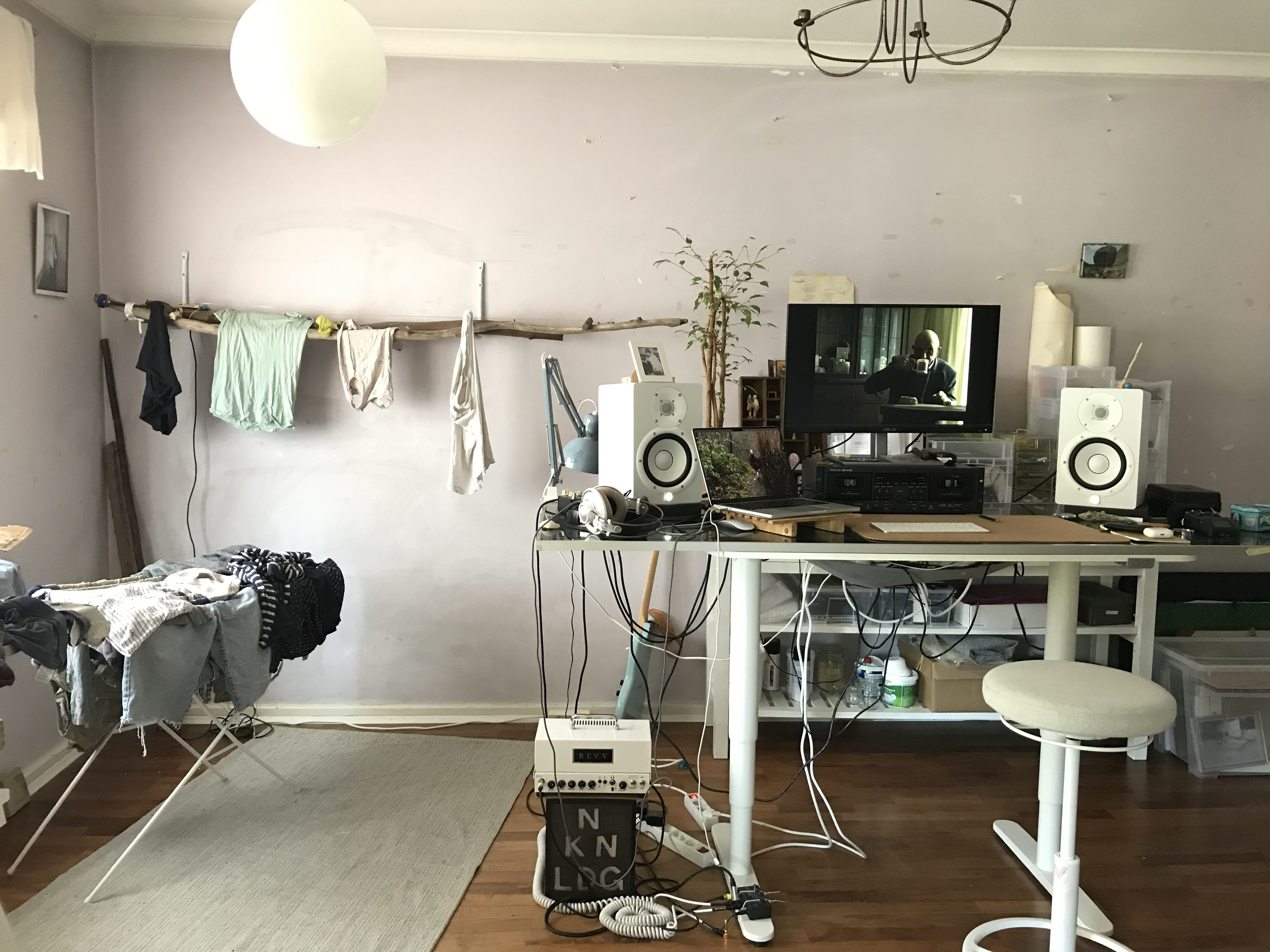
An inventory hangs near the entrance. Paintings, clothes, furniture, toys, books, food and household objects appear in the same list. After the conversation, visitors can return to it and find the things around them.
Detail
History
The exhibition ends on 5 July. In the artists’ account, the inventory stays on the wall and the sound objects remain in the studio. They continue to drink from the same cups and sit on the same chairs.
Related Works