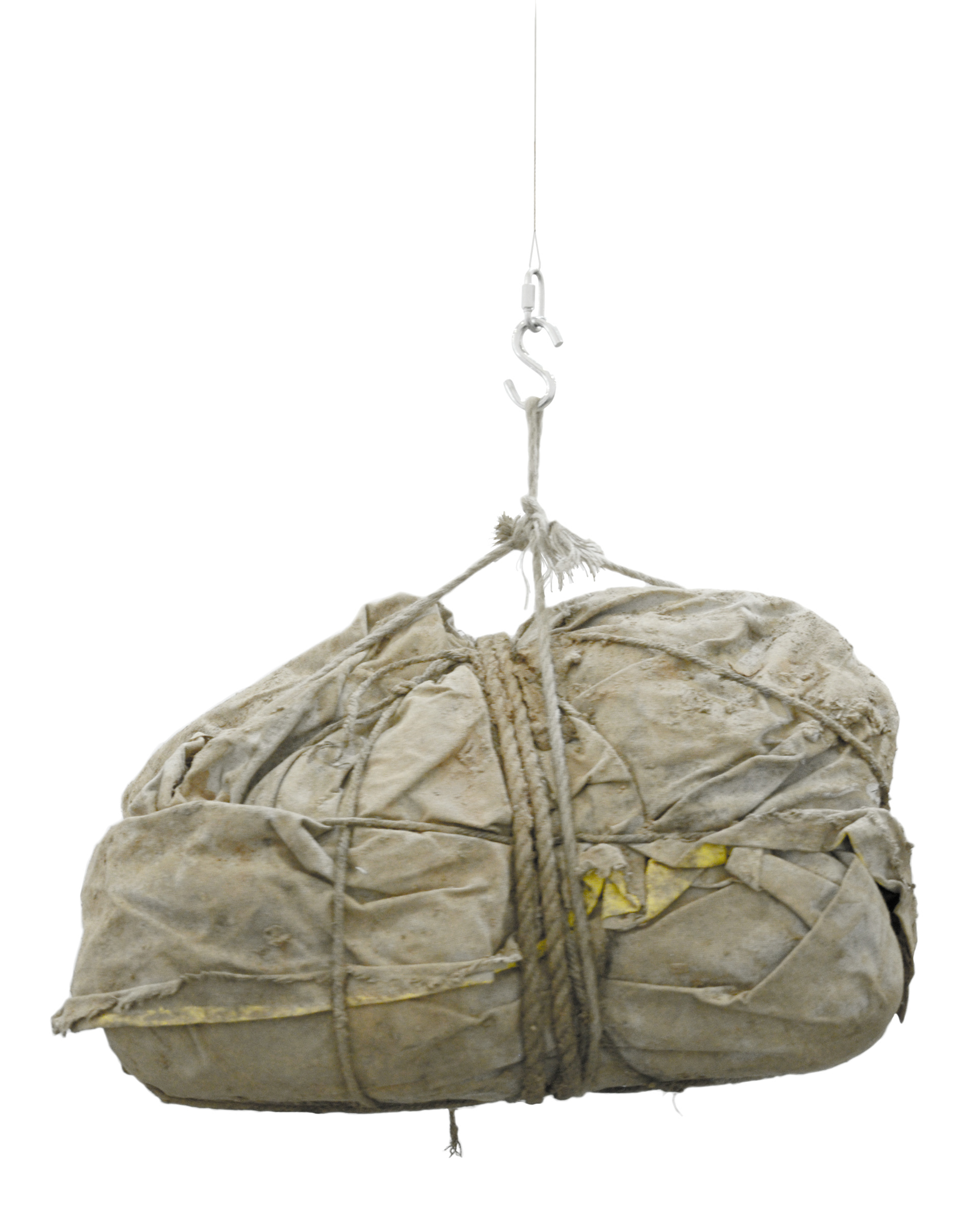
Detail
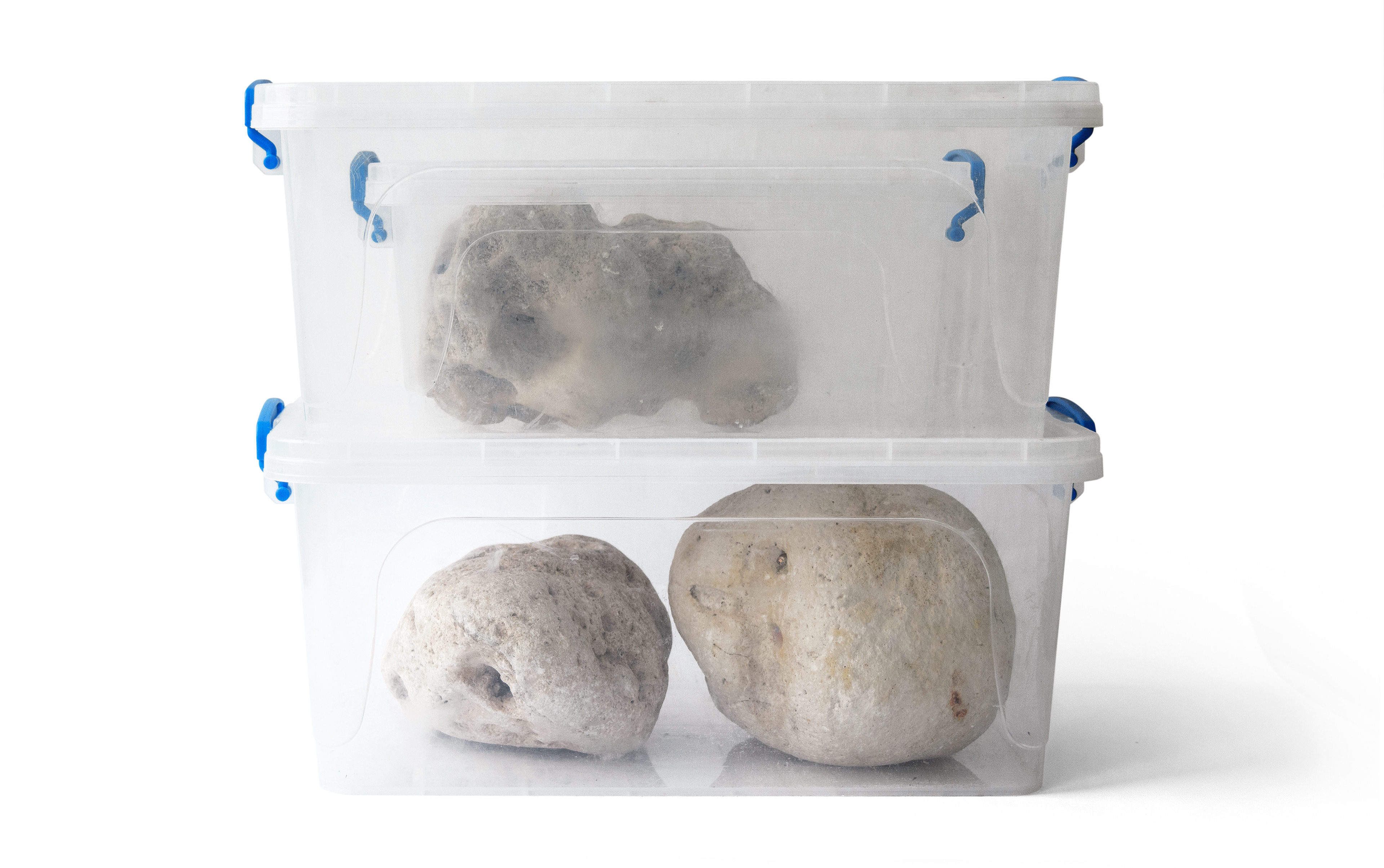
History
Our first day in Greece began at four in the morning as a nightmare that grew worse with every minute. We met the evening one hundred and twenty kilometres from Athens, in a place where, as we later learned, the legendary contest between Homer and Hesiod had taken place. With great difficulty we found a strip of land between the dirty sea and the road where we could spread a blanket for the night. Our work today is to spend the night in this strange place and see what happens tomorrow, the day after tomorrow, and so on, until we reach the destination. The road from here to Port25 in Mannheim, which we somehow have to cover in ten days, will become the tool that creates the work; the strange things that often happen in situations like ours will become its content.
Detail
Full Work →
Loading 180719 Metamorphosis…
Authorial Comment
We assume artistic work as a daily, constant will for creatively recollecting and re-creating the world and ourselves, such as daily unproductive scholar (attributed to Greek word σχολή) work similar to the job of a taxi driver or window washer. If society captures the space of politics, turning art into an object of consumption, we, in response to this, enter the territory of labor and make an invisible, existing-in-itself artistic act (ποίησις) the subject of social relation.
History
At the beginning of March 2020 we were in Moscow. Borders were closing and stricter quarantine measures were approaching; under these conditions Anton, as a foreigner, would find himself outside the law in Russia. This directly threatened both our shared life and our artistic work, so we decided to slip out of control. Before the complete lockdown we managed to escape into uncontrolled territory, where we could live through the difficult period while continuing to live and work together.
Art is woven into history; conditions and meanings are reflected in it and leave lasting imprints. One might decide that the fabric of culture gives birth to art, but the artist knows that its source lies outside. For more than four months we hid together on an uninhabited peninsula, understanding our action as a performative practice whose substance was the founding of Zones of Nonknowledge — lacunae and bypass tunnels — accepting insecurity and groundlessness as performative conditions, and circumstances as the material through which the practice unfolds.
Detail
An uninhabited, deserted peninsula. Marika and Anton have been living alone on the rocks for two months, evading the Covid quarantine.
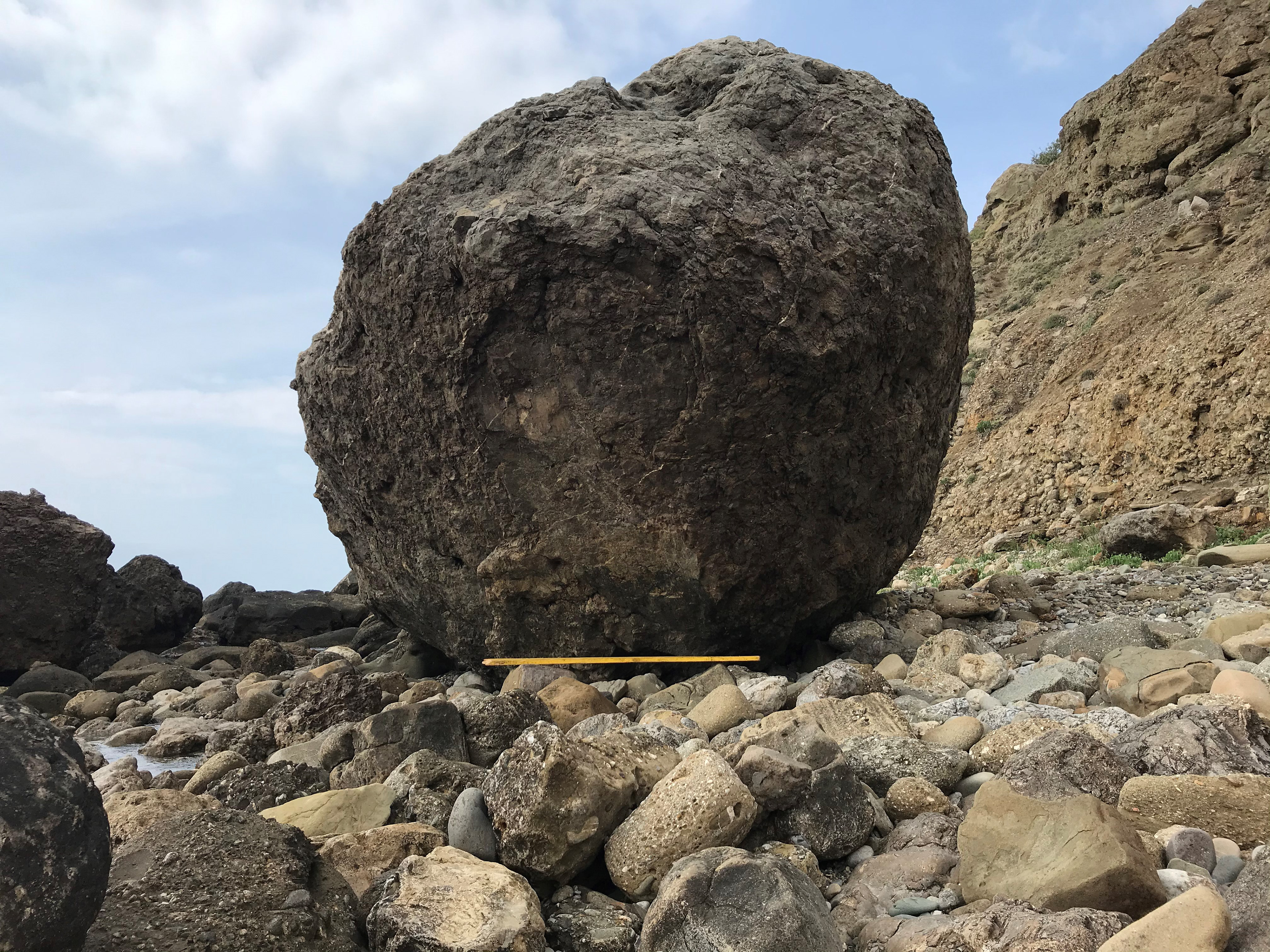
— The places in which we have ever lived always have something in common. And what they have in common is our world. This world makes the different places in which we live resemble one another. Somehow, their topology is the same. — When we woke up in our tent today, we had another flashback. Once again, it seemed that we were in the very same flat. As always. — And everything is arranged in roughly the same way as in our flat on Rabochaya Street in Moscow. — Yes, but now our flat has unfolded across five kilometres. And there are more rooms here. — Up there, between the hills, is our bedroom. The bed is in the tent. To go and wash in the morning, you have to walk five hundred metres from there, past large rocks and almond trees, go around the hill, and then descend along the bed of a dried-up river to the sea. — And that is where our bathroom is. — A large one. With a jacuzzi. — You can swim there wearing a mask; it is really great. Then you have to go two hundred metres to the left along the beach to reach the living room. — Not walk, but jump from rock to rock. It is quite strenuous physical exercise. — That is where we drink coffee in the mornings. — We are sitting here now. — There is a sofa here—the pebble beach. — Further on is the laundry, in the sea between the rocks. We wash the dishes and our clothes there. And if you climb the mountain, cross the field and reach the lighthouse, that is where our office is, because only at the lighthouse is there a mobile signal. — And here lies an enormous rock, about fifteen metres high. It fell here straight from the mountain. — It serves as the balcony of our flat. You can sit beneath it. We placed a board across the rocks there, and it became a bench. You can sit there in any rain and quietly read a book. So we also have a balcony here. More than one, in fact: there is also a gigantic fossilised coral reef at the edge of the beach. — It remains warm after all the rocks on the beach have already cooled. The sun has set, but the coral stays warm for a long time. Everywhere we find our place, resembling one and the same flat, even in a landscape as strange as this one. Everything here looks exactly like Mars. — But it all already seems perfectly ordinary to us.
— Today was a drill day for us.
— A spider bit me. It looked like a karakurt.
— What do you do if a karakurt bites you? We really freaked out.
— You have to cauterise the bite with a match. It is fine, it does not hurt very much. Bearable.
— Squeeze out the venom. Something was actually coming out.
— So it is entirely possible that we saved someone’s life today. Mine.
— I’ll be right back.
— Station 2, Six Dialogues about Place
Authorial Comment
To turn such a hidden, unproductive practice into an instrument of art, and to make the artist with their work-in-itself visible, a space of publicity has to be opened. This requires a particular figure: an outside observer who carries out a practice of materialization in which the groundless and aimless process is rendered. Through this materialization, the artist’s unproductive practices acquire the qualities of a percept that, at a certain moment, can be synchronized with the viewer’s perception and made into an object of storage and transmission.
Like fish of the Labridae family, which can change sex under extreme conditions, we separated such an observer out of ourselves. This other, curatorial mode of action allows us to combine unproductive practices such as Zones of Nonknowledge with materialization, communication and presentation. Material produced by recording such unproductive artistic work — documentary video and photography, audio recordings, notebooks, lists of things, maps, and the things themselves — serves as an ersatz object for the materialization and rematerialization of artworks without special artistic production.
Since we work together we have to talk everything through. Our work arises in the moment of dialogue, and words leave consequences. We fix the order of psychological movements in our conversations as a ritual of self-recollection. We build a position and collect imprints of connections and relationships in the form of rules, which exist to be used as instructions, but like leges naturales they open up in the process. Over the years, these rules have taken shape in a model of an institution into which we enter like an empty house in order to look at ourselves through the window. We called that psychological phenomenon the Absent Institution and use it for artistic purposes as a facade for unproductive practice.
Authorial Comment
We were on the Documenta, and everything there seemed strange to us. We felt like people from another time and space, with completely different concerns and expectations from art. It was the same alienation at the Biennale in Venice in April.
It’s about how we were born, get accustomed to the bodies, that change all the time, and finally, something happens with everything. And in the course of time, we will always lose everything we adapted to. Everything turns out to be alien, and this alienation not only manifests itself in the form of loss, in the fact that we rely upon absence, but it also has another side. Nothing, in particular, belongs to us — we have only the world in complete. This nothing is a meeting place for aliens.
Detail
Full Work →
Loading 220619 Meeting Place for Aliens…
Related Works