Authorial Comment
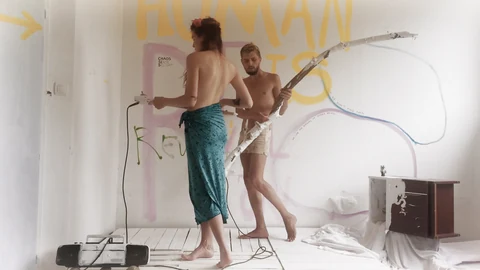
In the summer of 2016, we returned from Budapest to Moscow and sold our guitars. In Budapest we had invented Samotryas so that we would not have to carry unnecessary weight: a Samotryas could be assembled from available materials directly at the concert venue. With the money from selling the guitars, we bought a refrigerator and organized a performative expedition to the south.
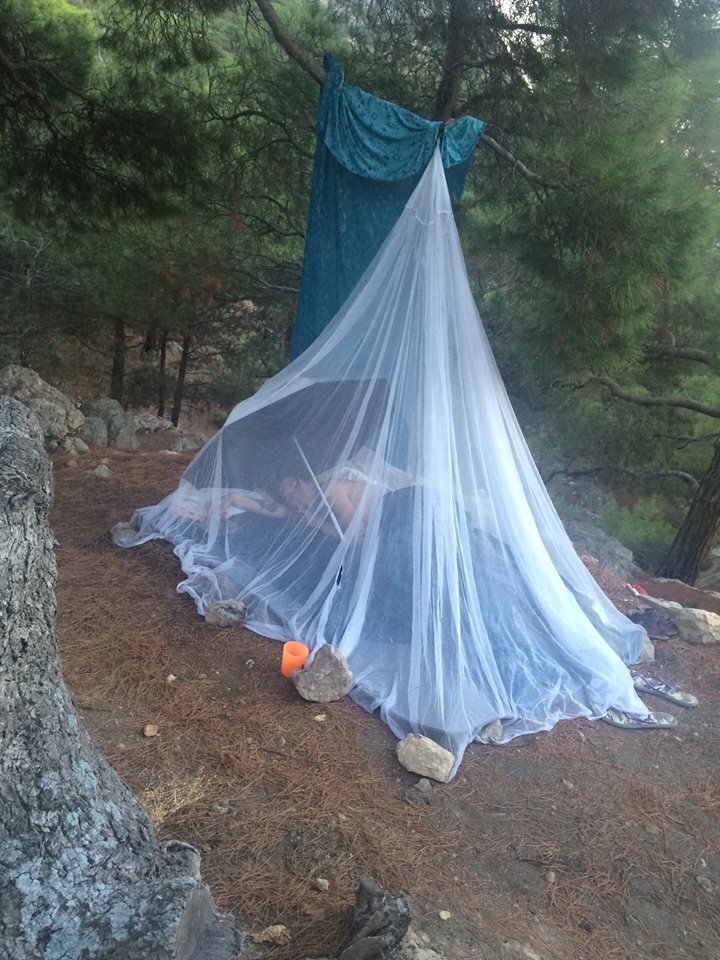
We lived directly outdoors, had no belongings, and travelled by hitchhiking. So that local residents would not be hostile towards us, but would receive us warmly and hospitably, and so that they would have no questions about who we were, we introduced ourselves as employees of the Archaeological Commission.
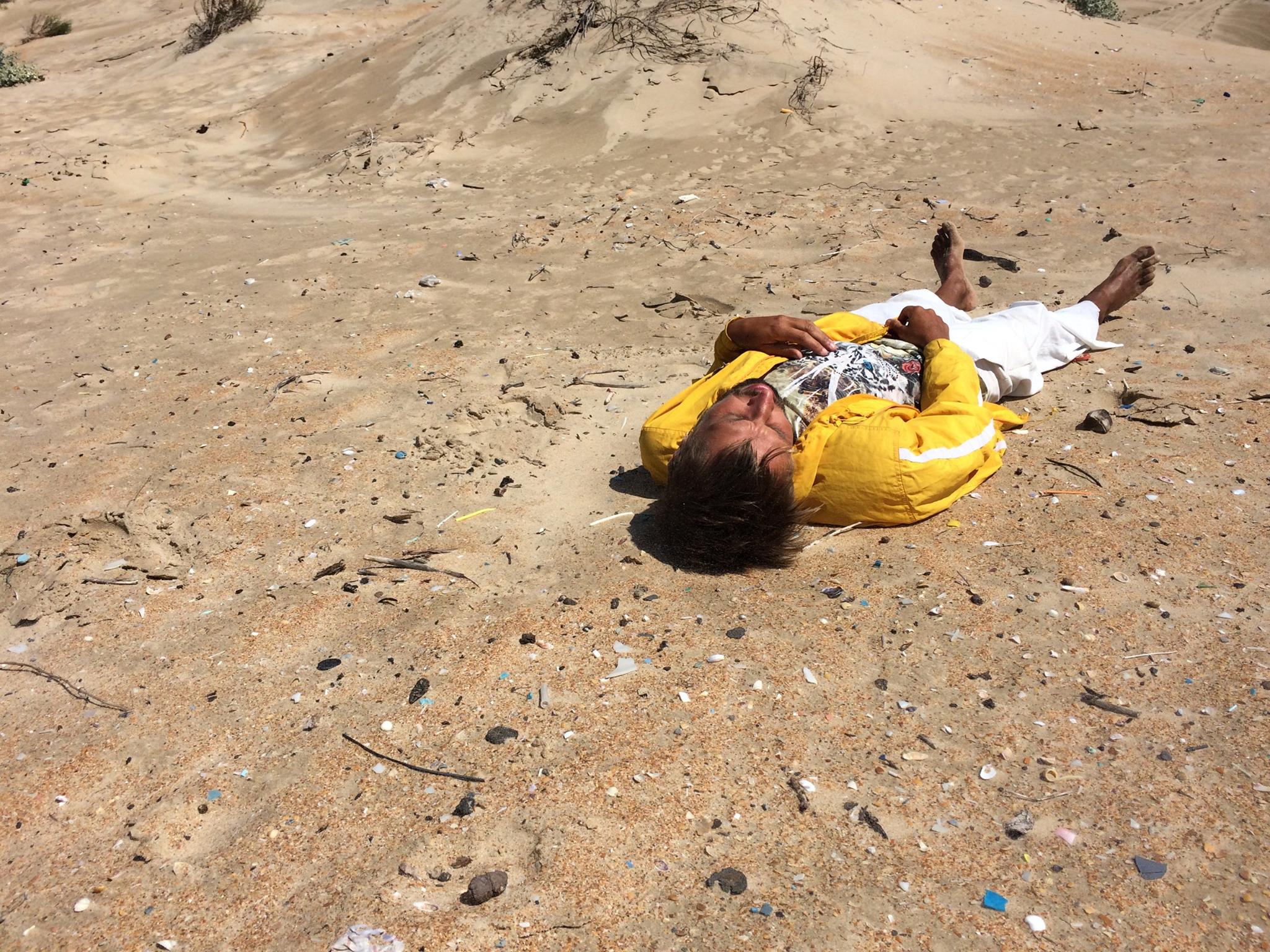
Out of this grew a mythological project in which we entered insignificant, unspectacular artifacts of the landscape into the Archaeological Commission Register. These six works are elements of that register.
History
Employees of a commission
The title was a practical form of introduction. Two travellers without an official affiliation could present themselves as members of an institution and, in doing so, change the conditions of an encounter. The commission existed in this exchange before it had any administrative existence. Its name was enough to open a conversation.
In the 2016 Krym Book, the project has a spare definition: an Archaeological Commission “for the study of the object world of contemporaneity from the point of view of museum-scientific interest.” On the same spread appear an urban drift/project and a route of movement. The institution was to travel with the artists, rather than occupy an address.
A register for future archaeologists
The committee's jurisdiction extended to the ordinary present. It did not wait for time to turn a thing into a relic; it entered the thing into a register while its surroundings were still in use. A small, unremarkable object could become a cultural monument through the act of recording it. Registration neither explained its value nor improved its appearance.
Authorial Comment
As part of the Archaeological Commission, we are compiling a Register of Cultural Monuments for archaeologists of the future.
Facebook, 24 July 2016. Inzhir / Cape Aya. Post.
History
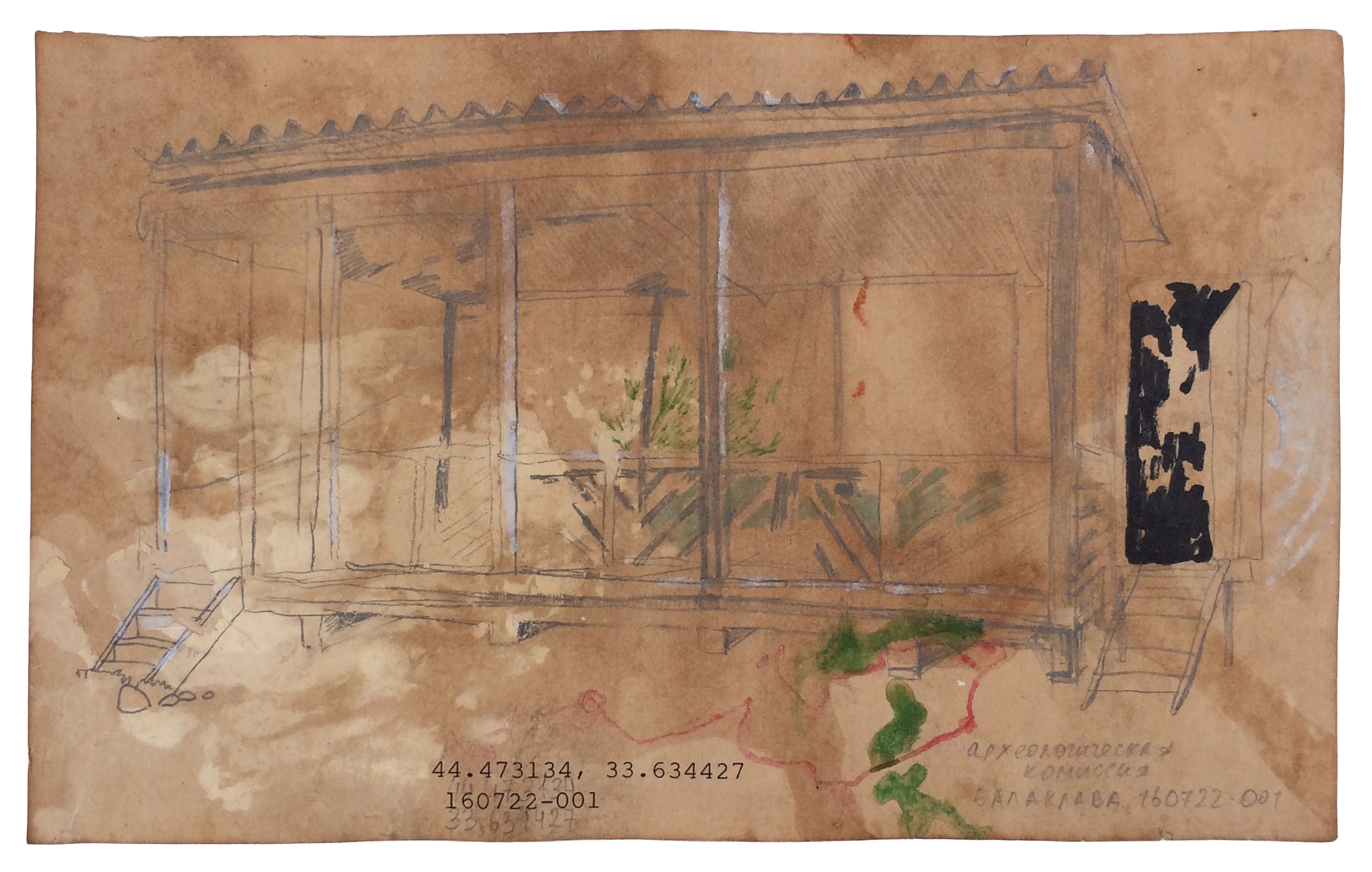
The six registered elements are presented without individual interpretations. Their coordinate-like filenames identify photographs in the archive; the photographs themselves remain the register's entries.
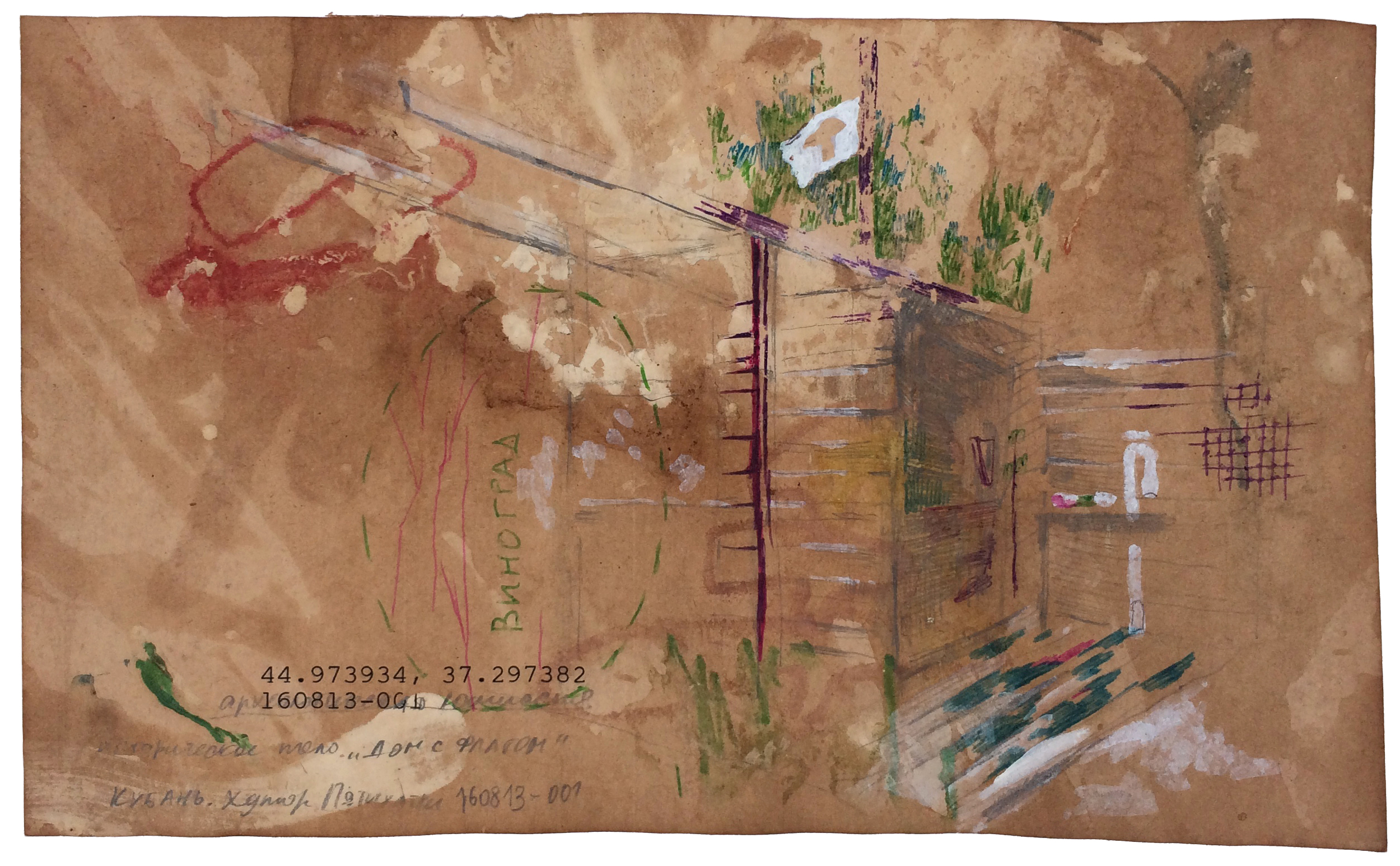
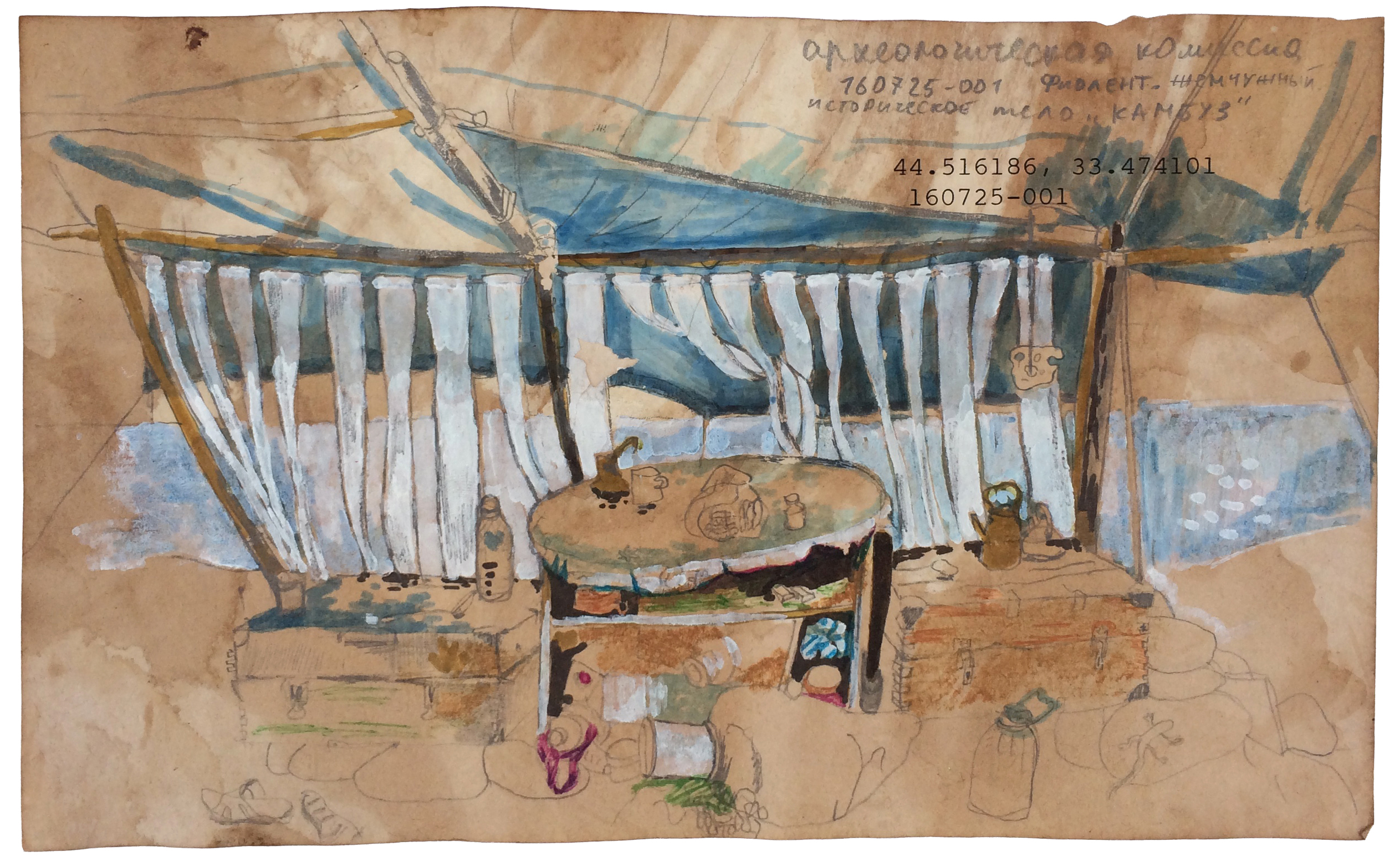
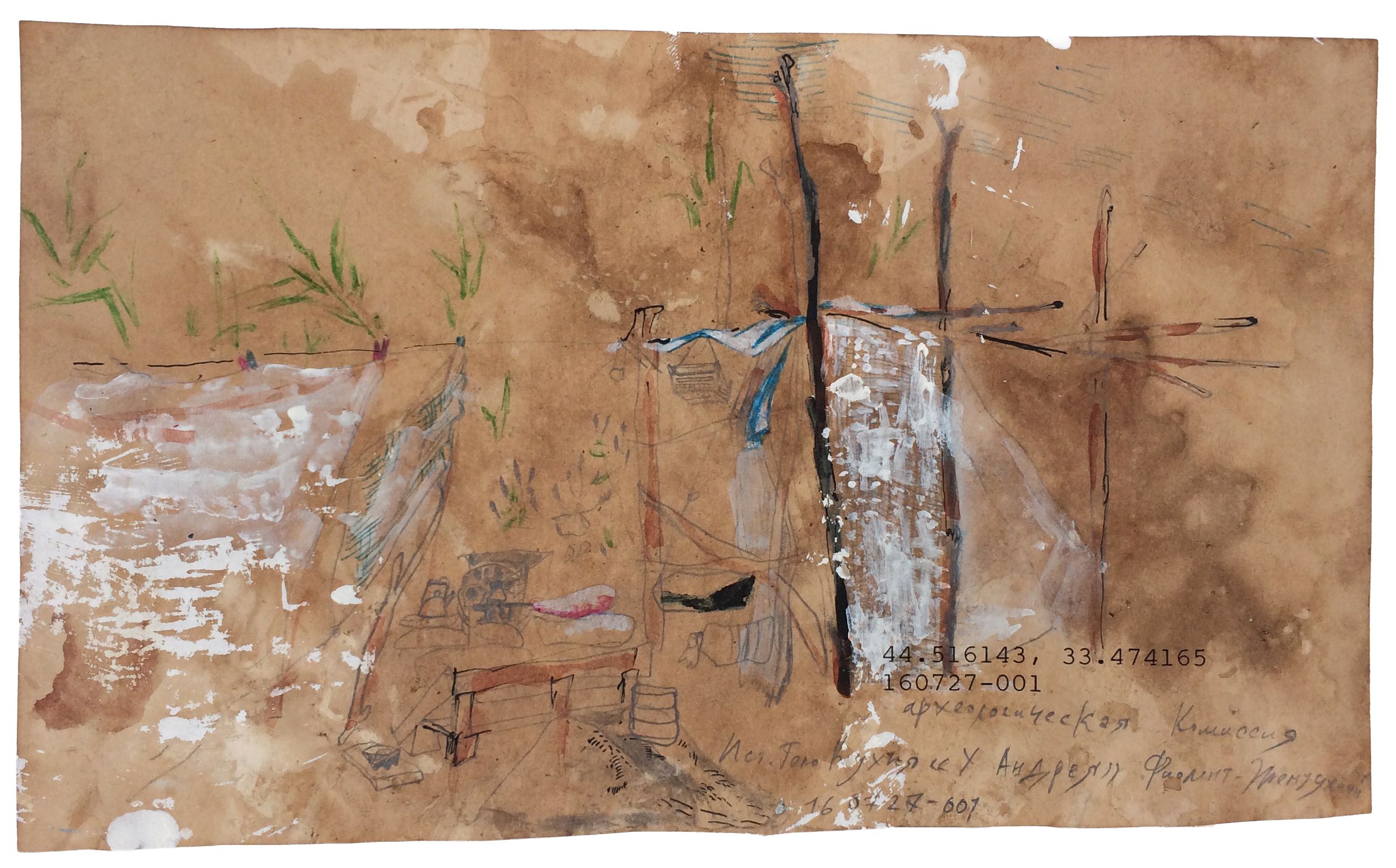
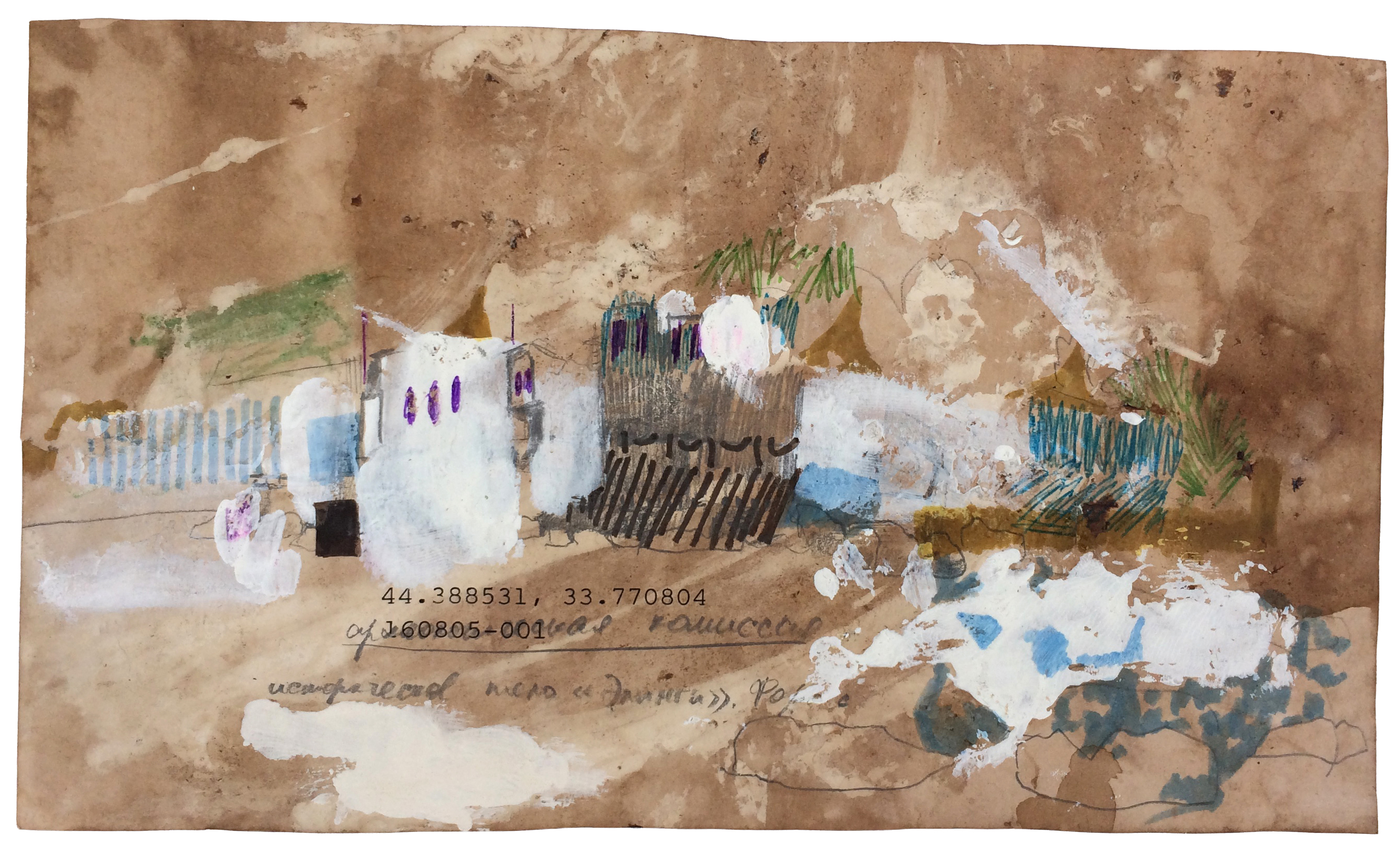
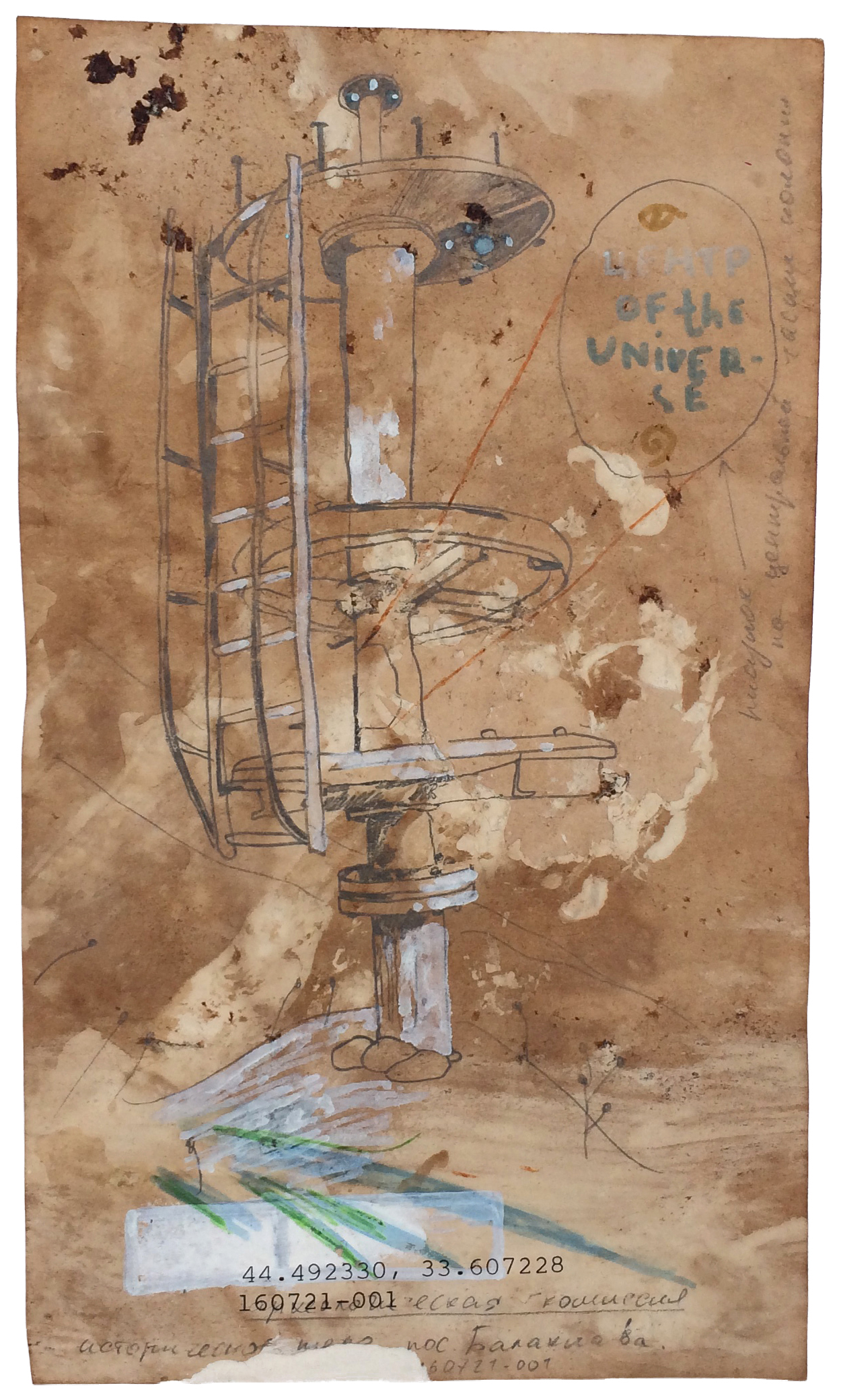
Things washed ashore
Another page of the Krym Book turns to things found or washed out by water. The shore is a place where objects arrive without their histories. Here a commission can begin with what happens to be there. The notebook does not establish a complete inventory of these things: the surviving passage is only partly legible.
The stake and its hole
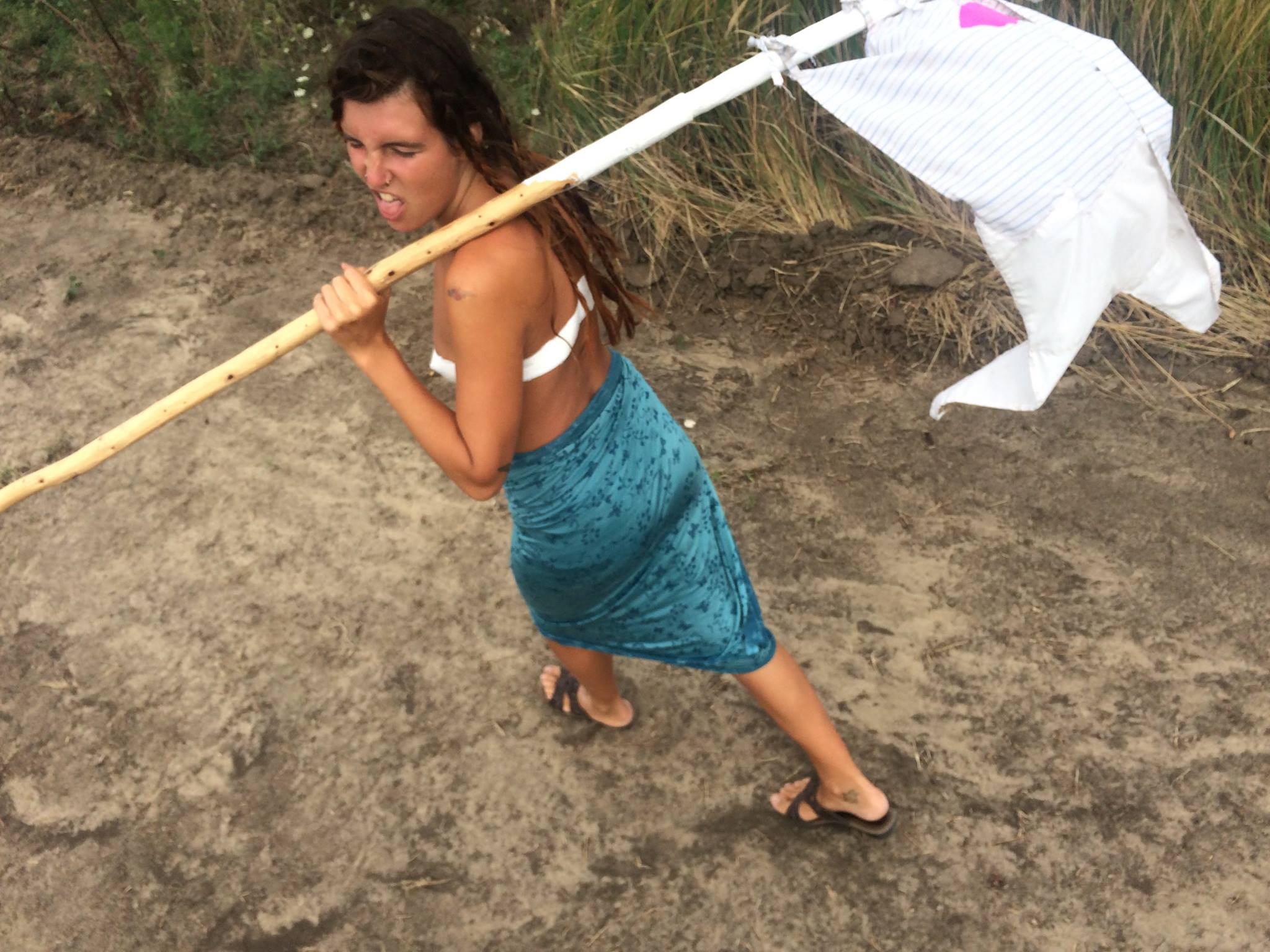
At Pyatikhatki, visitors moved across an open field from one artist to the next, stopping to hear what each had made. Marika and Anton brought pegs, their traces in the soil and a white cloth construction carried on a long pole.
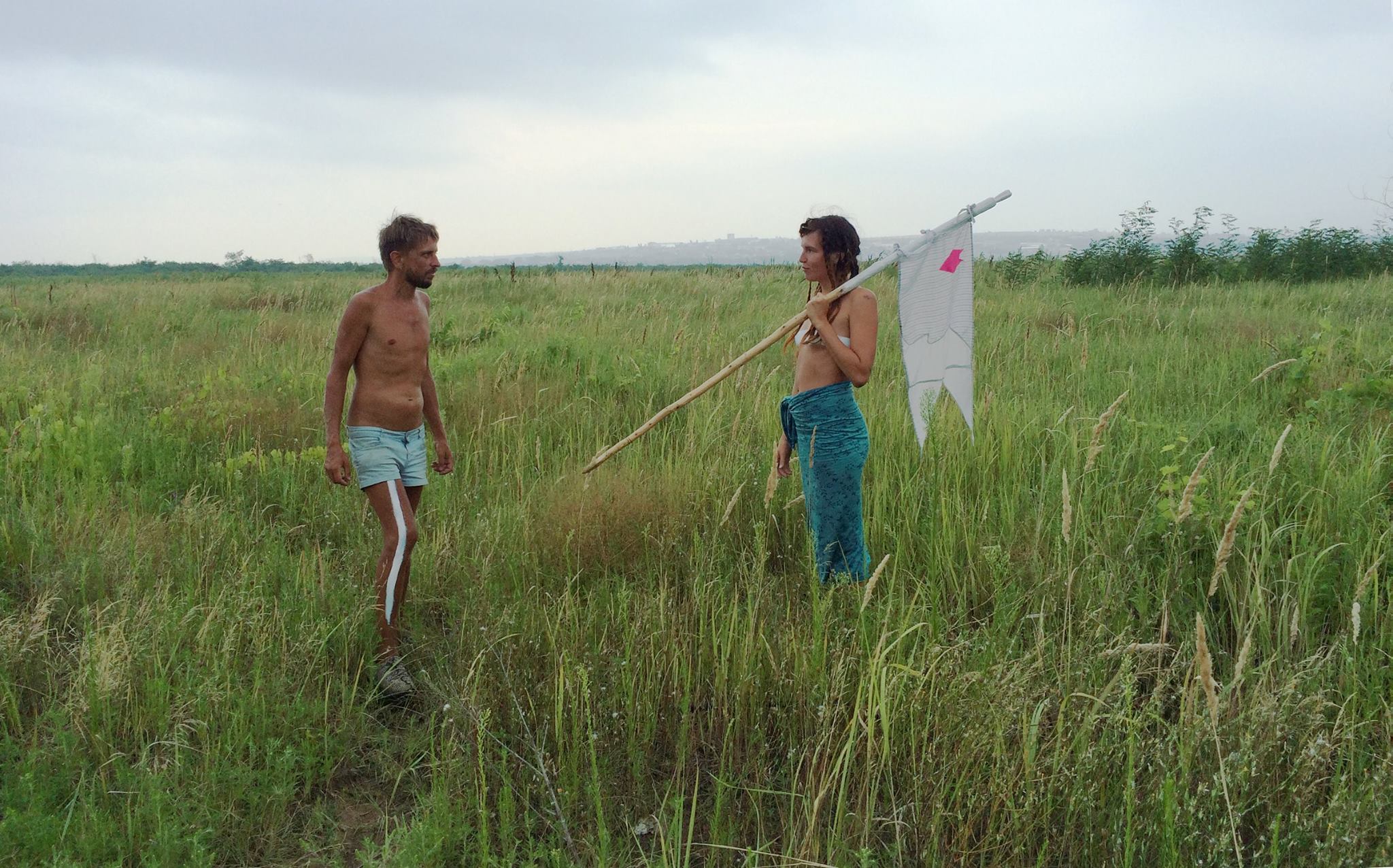
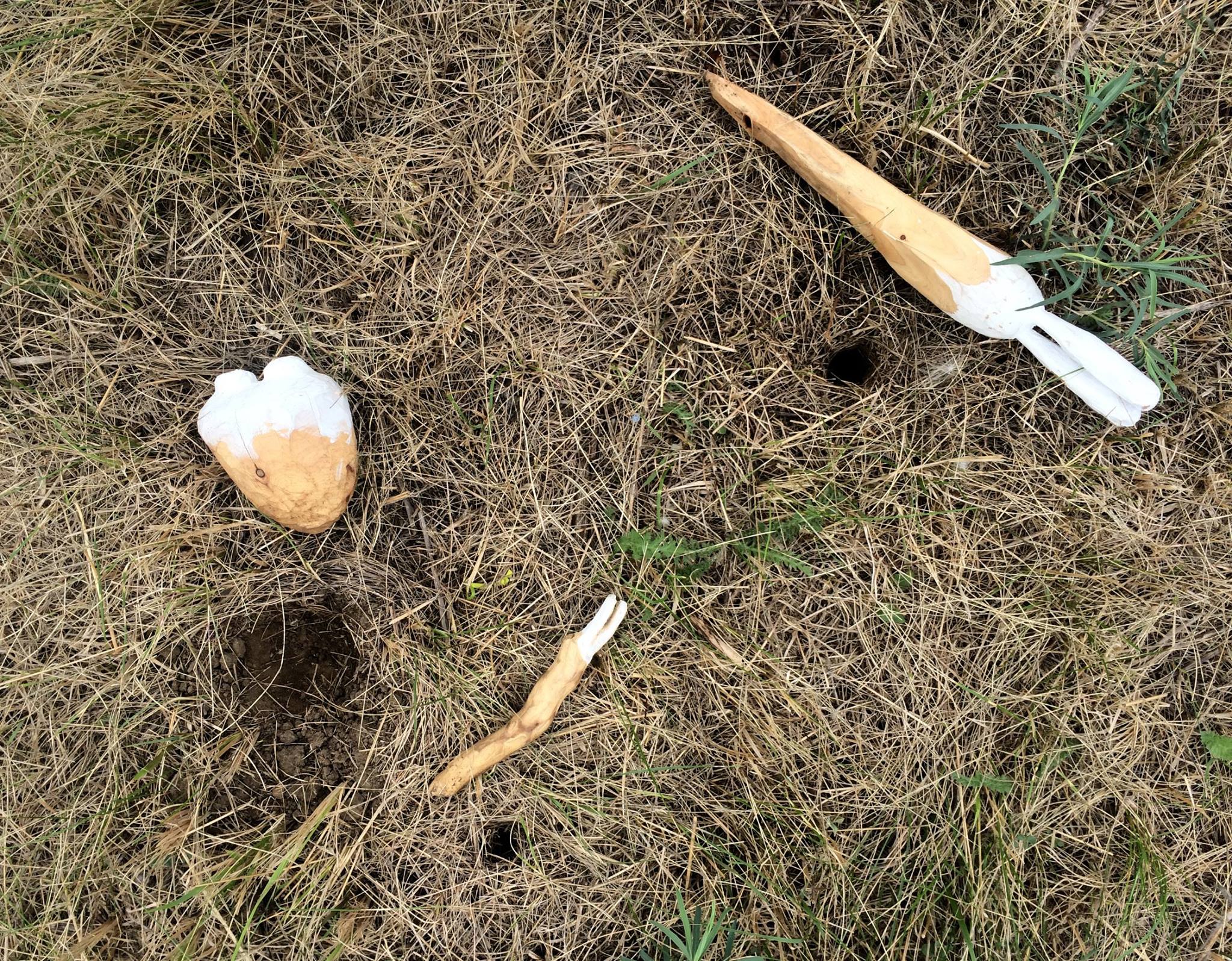
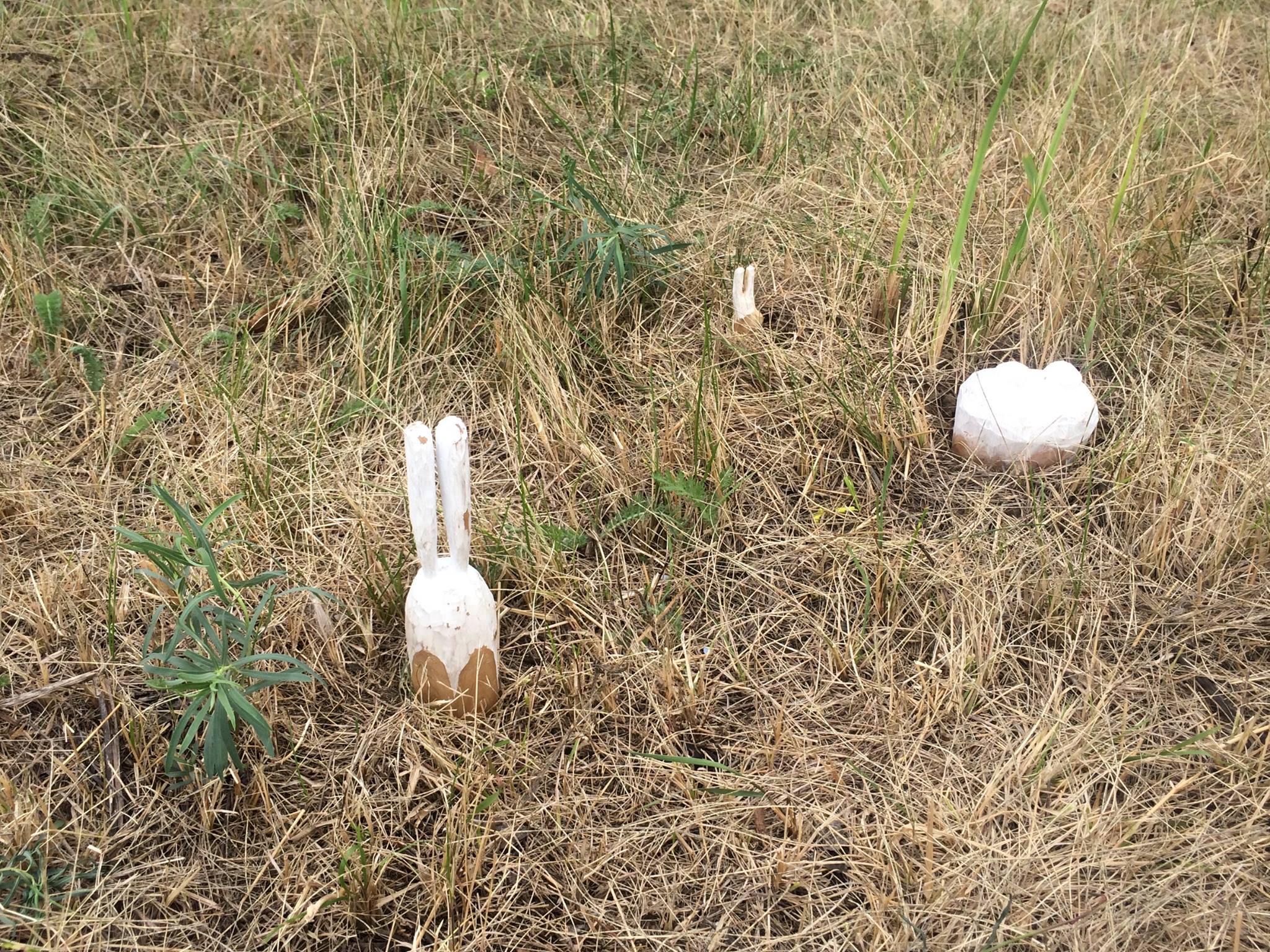
The artists showed the length and material of the pegs, but also the holes they left when removed. The work could therefore be encountered twice: as an object placed in the ground and as the empty imprint it had made.
A related construction could be held at the scale of a peg and extended into a flag. It gave this improvised gathering something resembling an institutional emblem, although no emblem was necessary for the commission to exist as a way of acting.
Authorial Comment
At Pyatikhatki, we showed these pegs and the holes they left, and carried a transformable flag-object structurally related to the form of the peg.
Retrospective authorial testimony, edited English version, 22 August 2026.
History
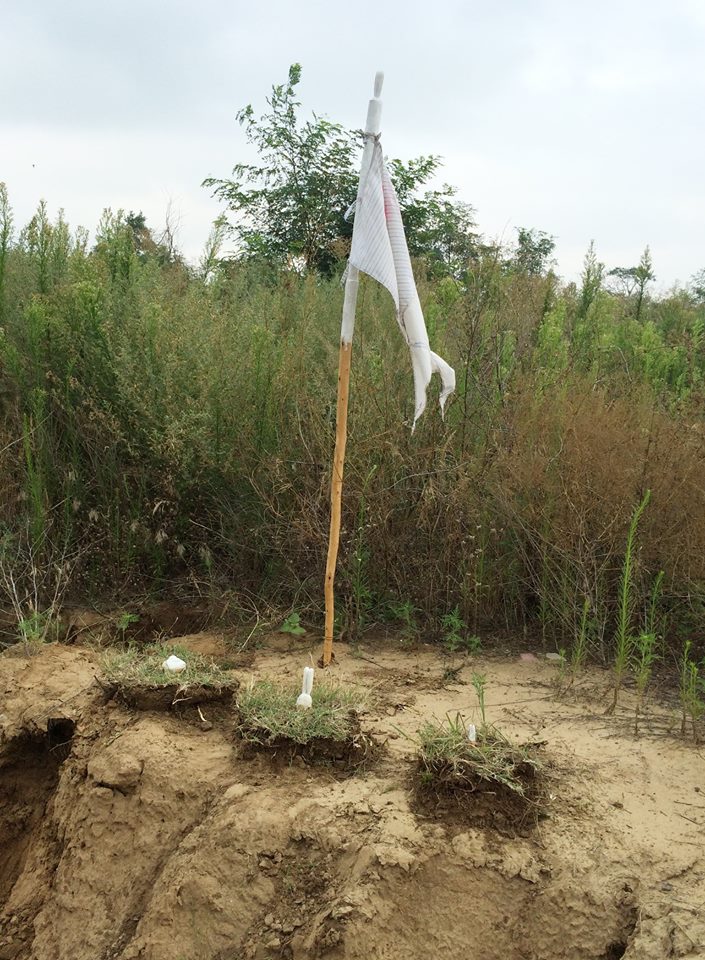
The Krym Book had already put the question of a limit alongside drawings of peg-like forms and a probable Pyatikhatki plan. In the field, the limit could be as ordinary as the end of a stick and the small opening it left behind. The photographs show a related situation; they are not presented as entries in the six-part Archaeological Commission Register.
2016 Krym Book, pp. 12, 15, 26–27; Retrospective conversation, 22 August 2026.
Archaeology Day
By 15 August, the travelling commission had reached Rostov-on-Don. The expedition's public announcement remained as informal as the authority it claimed.
Authorial Comment
Our archaeological committee has reached today to Rostov-on-Don (four cars from Anapa in one day). Where Russia celebrates Archaeology Day. Dear friends, Congratulations! On the way to Moscow.
Facebook, 15 August 2016. Post.
Related Works
Samotryas at ZDES on Taganka