Detail
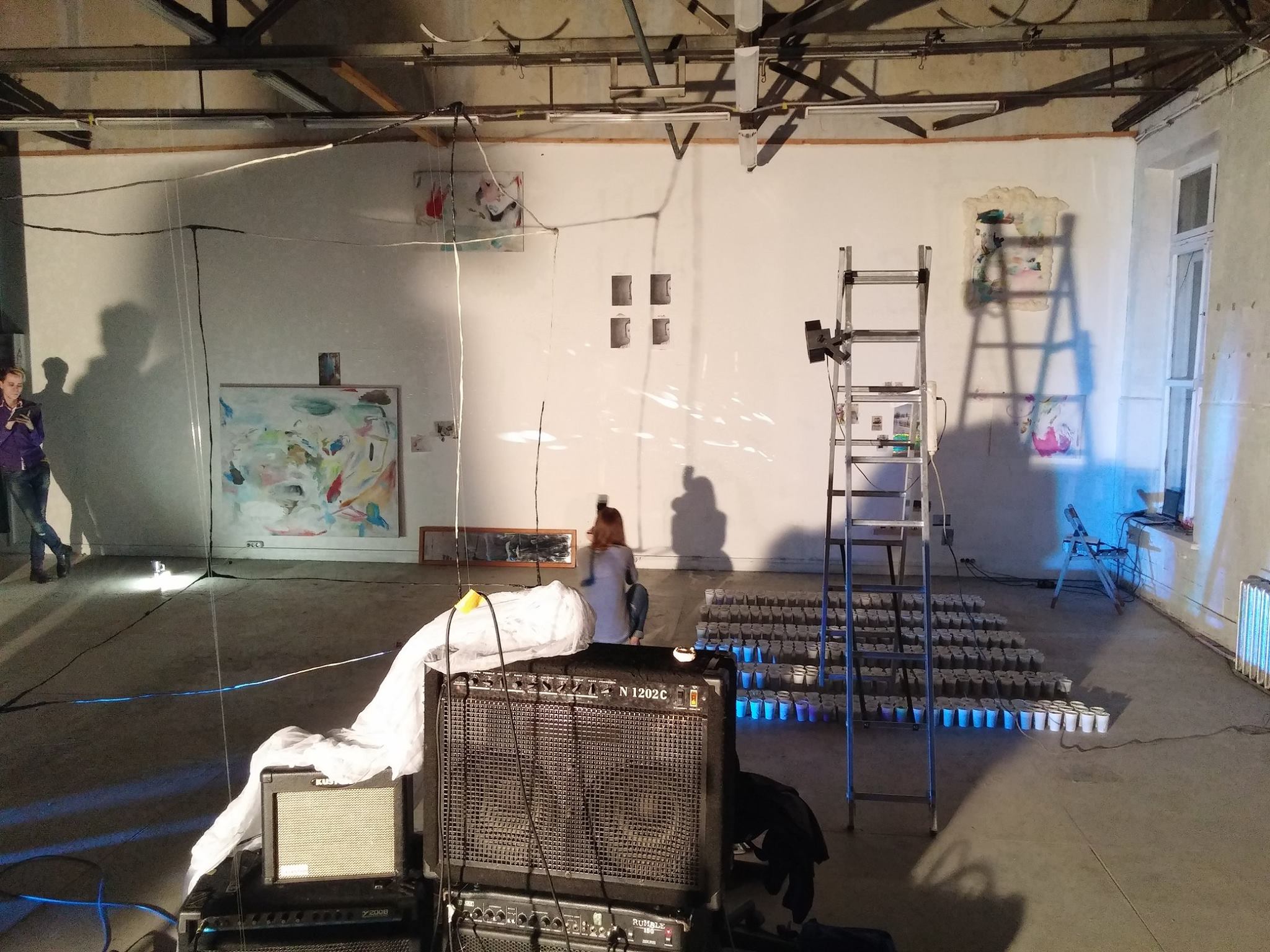
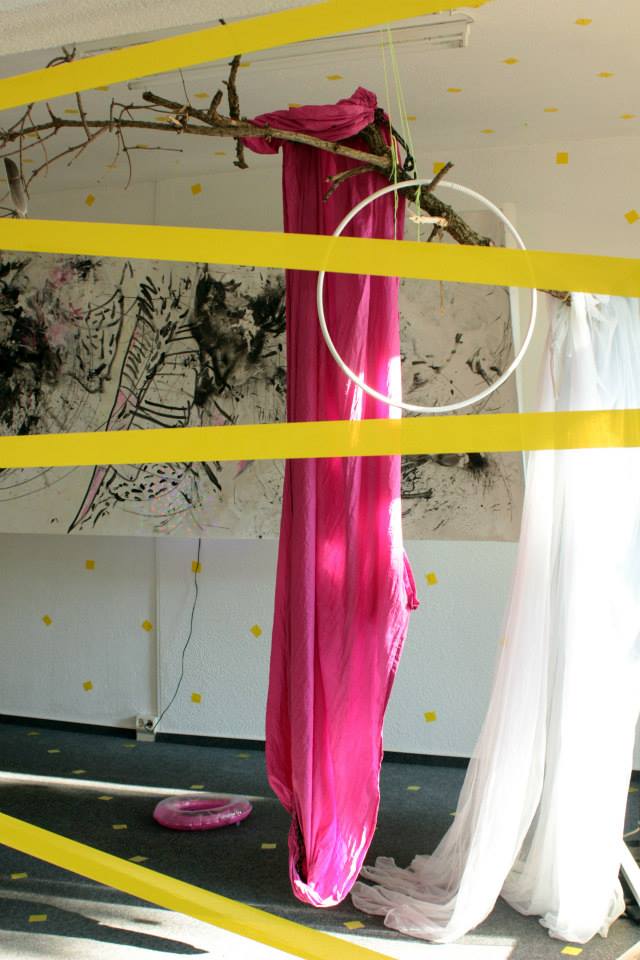
At the centre of the room, a branch approximately three to four metres long was suspended on cables. A length of black fabric of approximately six to seven metres, a white mosquito net and a pink hammock hung from it. These materials also appeared in the account carried by the first wall, where their use during the night in the park could be read alongside the object.
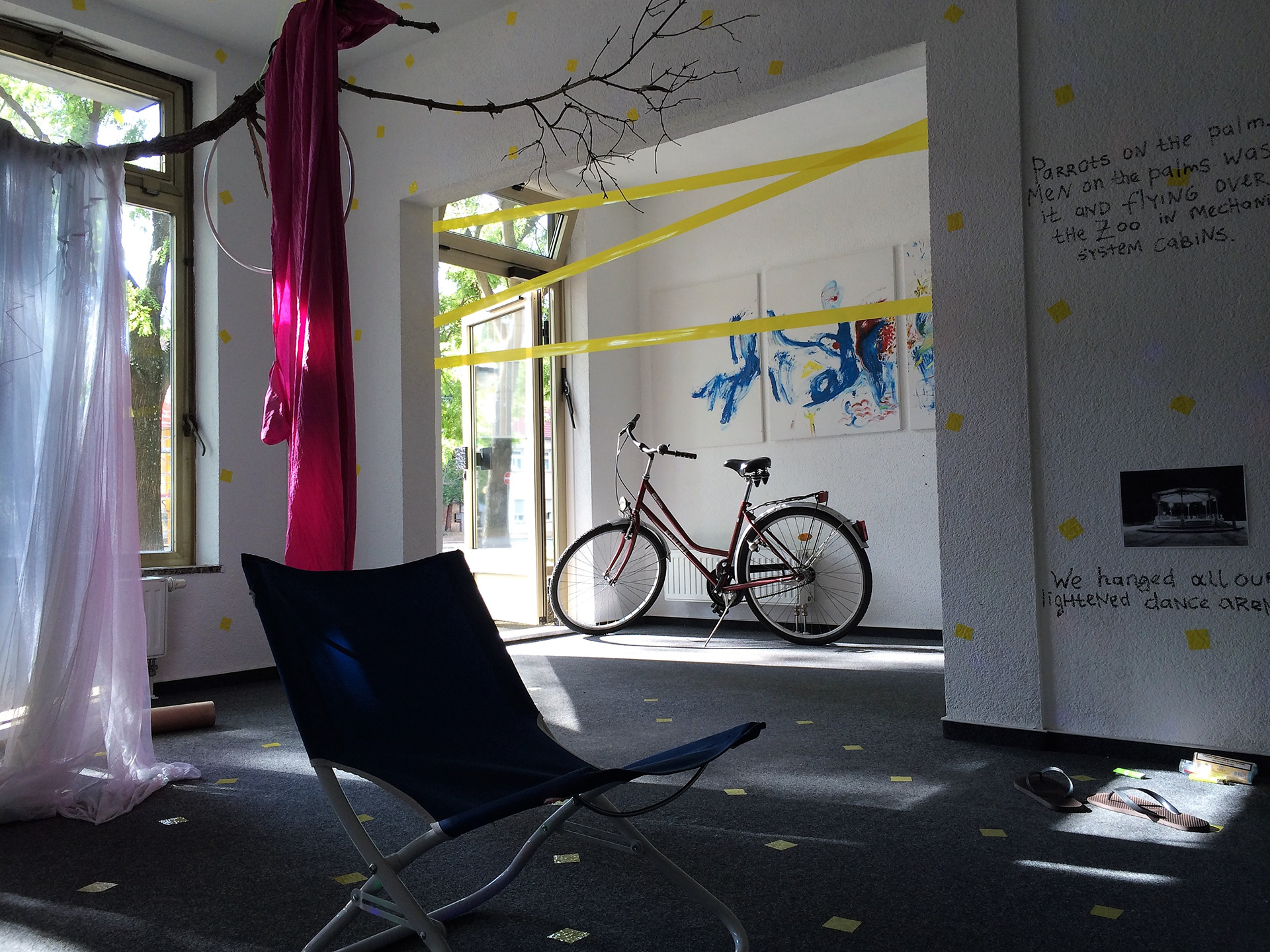
On the first wall, a first-person text by Marika and Anton was written directly on the wall in thick marker, accompanied by photographs and video. Its timed entries reconstructed their night in Parc de la Ciutadella: looking for somewhere to sleep and treat scabies, meeting three people, being soaked by the irrigation system, drawing on a roll of paper on the dance floor, and finding Sonia Zafra's memorial plaque. The wall brought this sequence of events together with its photographic and video illustrations.
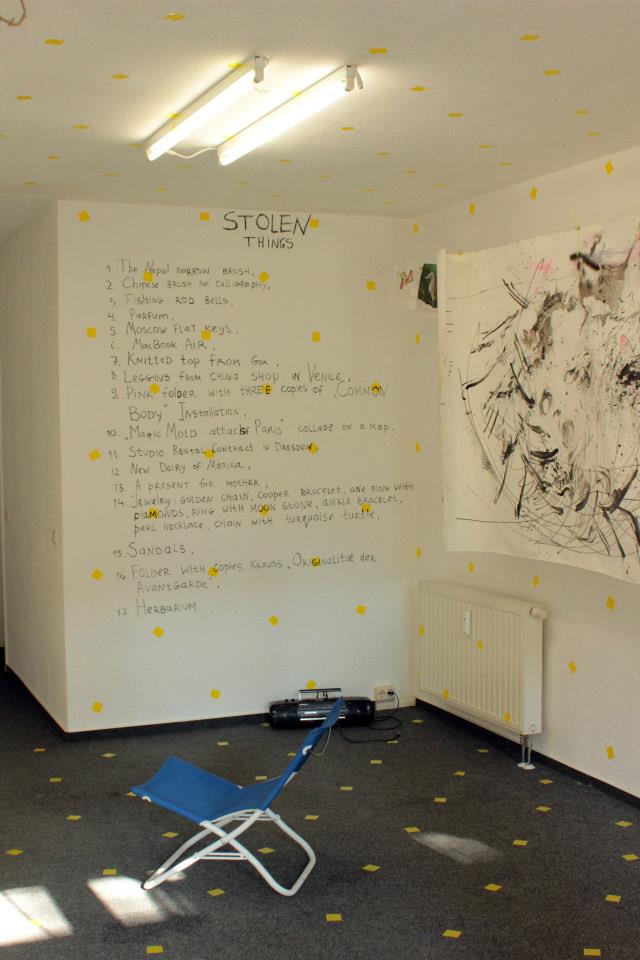
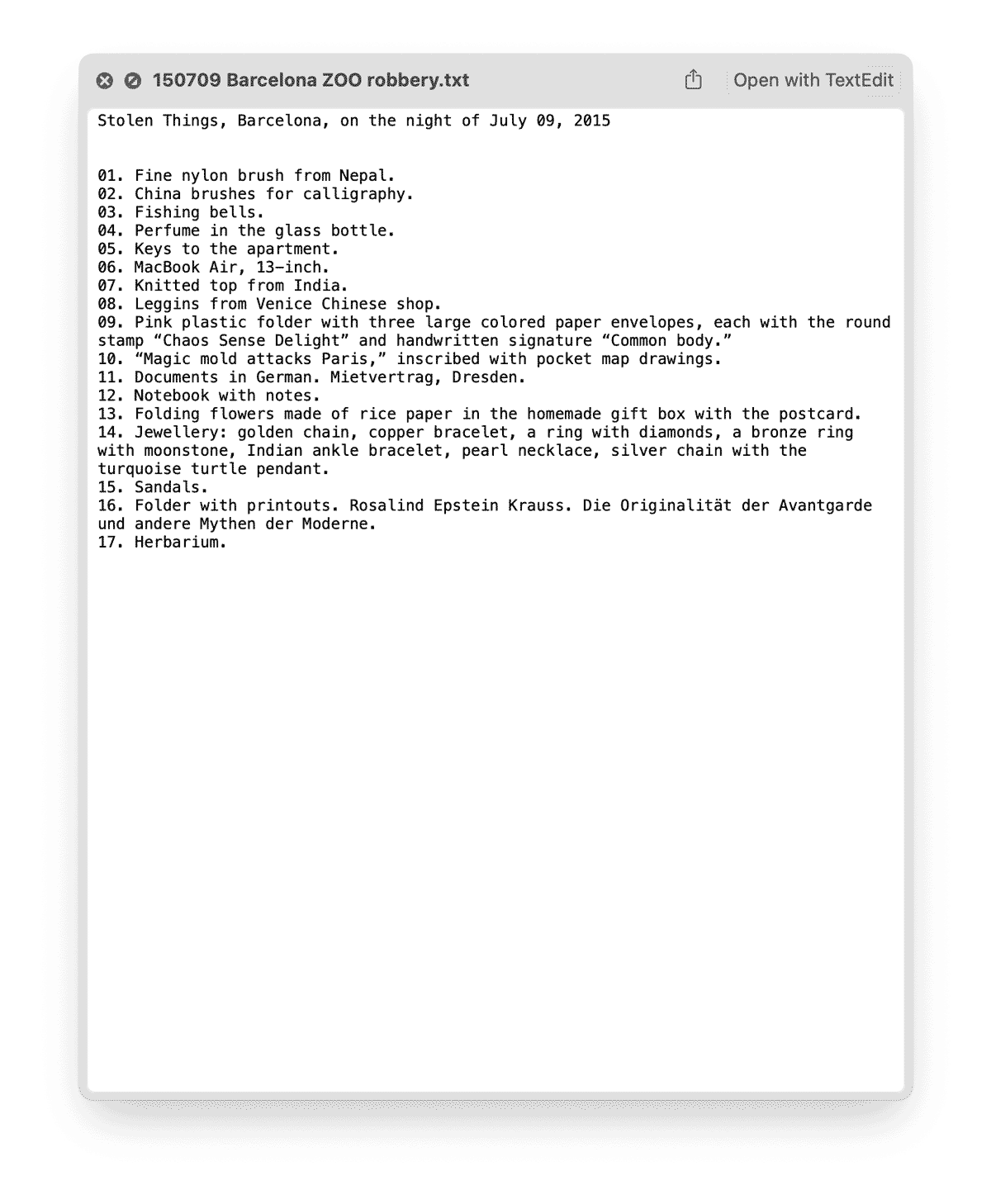
The second wall set another first-person account beside that sequence. Written in thick marker, it retold the same night from the robbers' point of view. An inventory of the belongings stolen from Marika and Anton followed the text on the wall.
The third wall moved back to 5 October 1991. A short text written in thick marker spoke in the first person as Sonia Zafra. Beside it were documentary material in Catalan, including a black-and-white printout of the Wikipedia page about her murder in Parc de la Ciutadella, and a photograph.
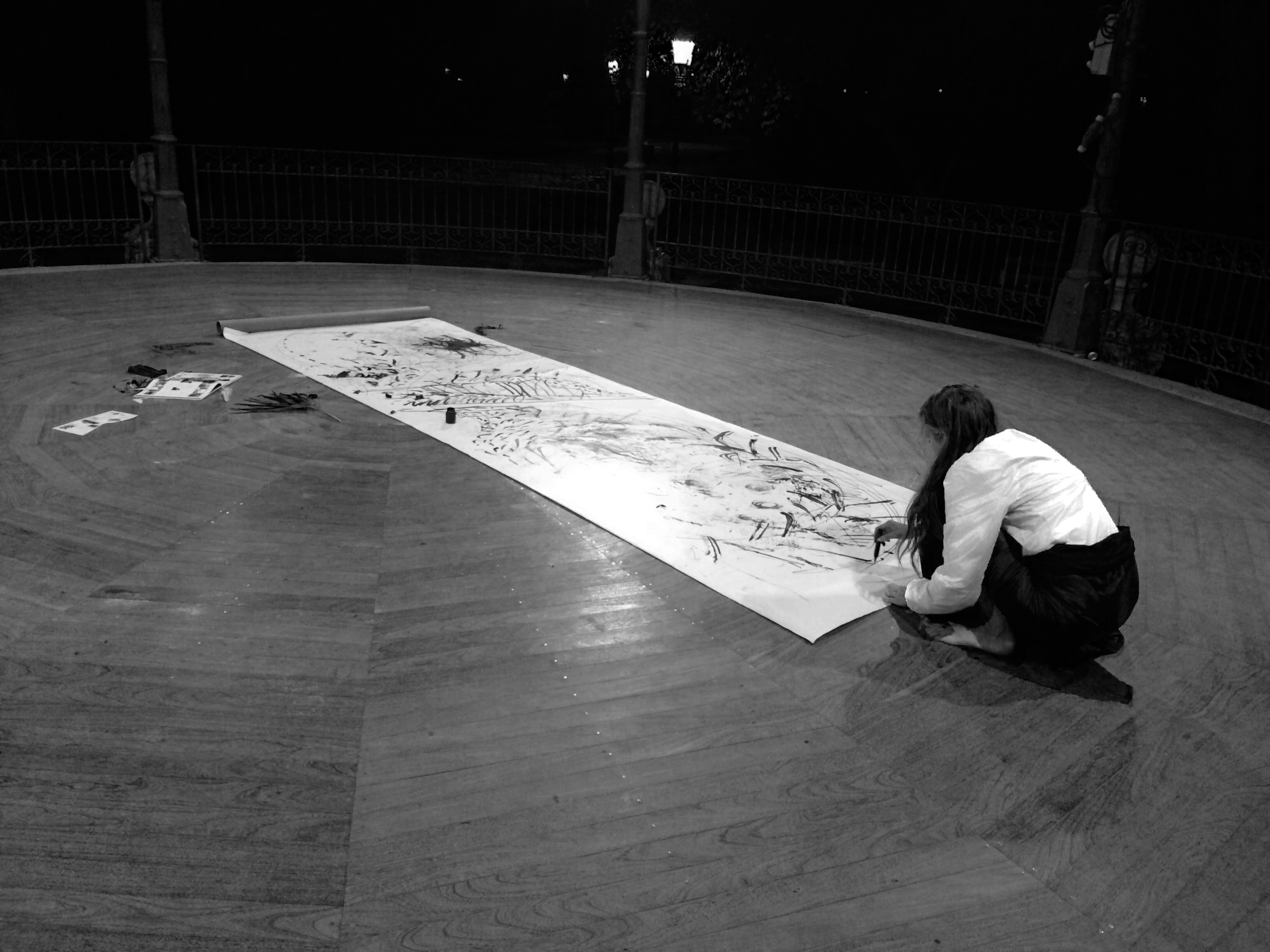
On the fourth wall, printed copies reproduced the large calligraphic work made by Marika and Anton on the arena in Parc de la Ciutadella. The presentation dates its making to 10 July 2015 and states that the original was destroyed. Visitors therefore encountered the work through its reproductions.
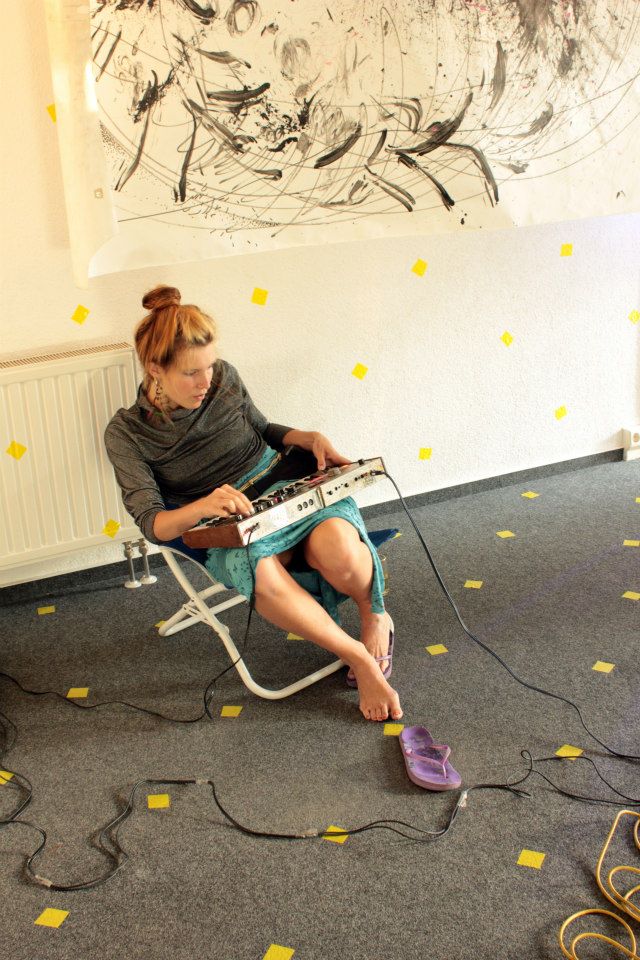
The Things can be understood less as a reconstruction of what happened than as recollection: a reassembly that returns to an event not to restore what was lost, but to find a new path through its absence.
Recollection
This logic precedes the Barcelona night itself. A few weeks earlier, Marika Krasina and Anton Kryvulia had made Common Body, an inventory of everything in their room in Dresden. The list recorded more than possessions. It fixed a temporary configuration of their shared material body: an imprint of a state of the world at a particular moment. The things could disappear, change hands, wear out or be replaced, while their enumeration detached this configuration from the immediate present and allowed it to continue in another form.
The night in Parc de la Ciutadella radicalised this operation. A sequence of almost ordinary circumstances — searching for somewhere to sleep, treating scabies, the unexpected activation of the irrigation system — displaced the night from its habitual course. The soaked belongings were moved towards an empty, brightly illuminated dance floor. On its wooden platform, the artists unrolled a found roll of paper and began drawing with their hands and palm leaves. At the same time, another event was unfolding around the arena: a backpack containing some of their belongings was stolen. In the exhibition's parallel narrative, this event is told from the imagined point of view of those who watched them and took the backpack.
These two actions — criminal and artistic — do not explain one another, yet they overlap in place and time. In the artists' present reading, this coincidence allows an accidental loss to acquire the structure of an unintended sacrifice. Part of the material body recently fixed through an inventory disappears; at the same time, a spontaneous, ecstatic artistic action takes place on the arena. Disappearance does not bring the event to an end. It becomes a rupture through which the event continues to unfold.
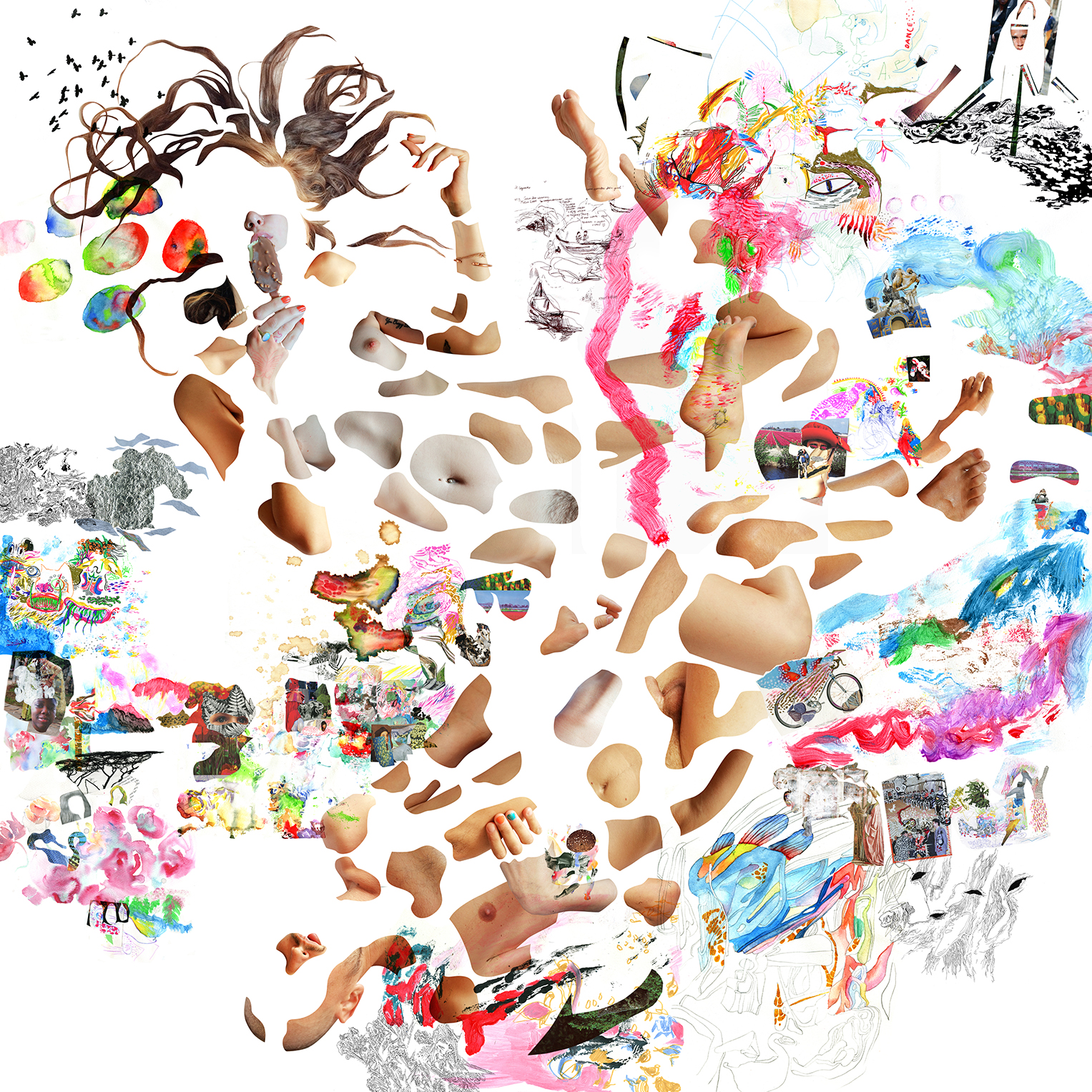
The Dresden exhibition therefore does not bring the lost things back in their former sense. It acknowledges their absence and creates a place for it. The list returns the things as names; photographs and video as traces; stories as divergent perspectives; surviving objects as the remainder of a body that can no longer be restored to its former wholeness. Through this place, the missing things symbolically re-enter the artists' shared world. The artistic reassembly does not compensate for their loss. It makes absence active.
In this sense, recollection is neither the preservation of the past nor a return to an initial state. It is remembering within a new assembly, a return to what remains essential within the present configuration. Loss becomes a condition of this reassembly. What happened passes through disappearance and can individuate again, in another configuration of things, relations and time.
Repetition in Rabota therefore does not reproduce an original event. It passes again through the rupture the event has left. A list, an exhibition, a performative action or a new assembly of traces creates no substitute for what is absent, but a place in which absence can persist, act and bring things into relation again.
Recollection is a return not from absence, but through absence.
Related Works