Grund
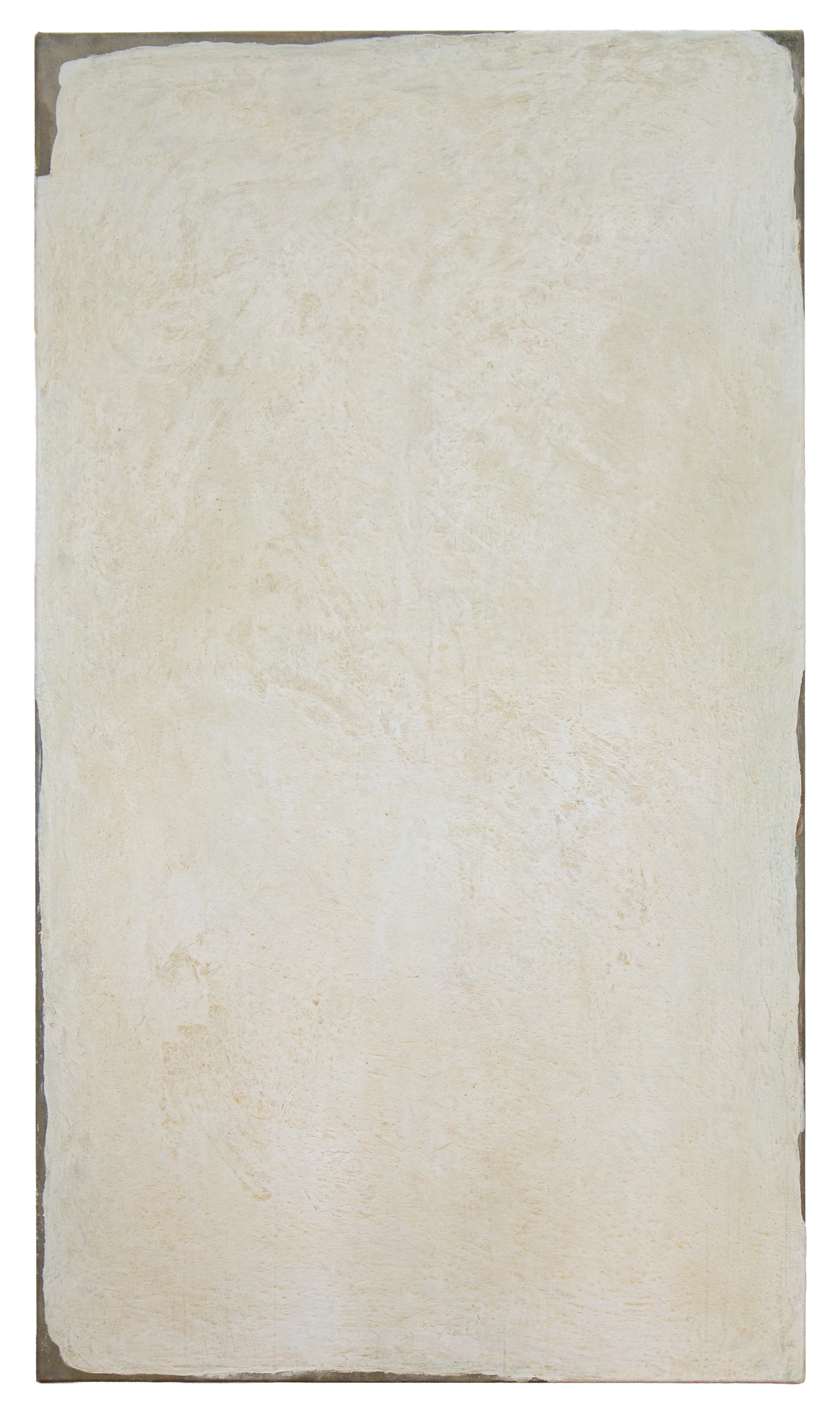
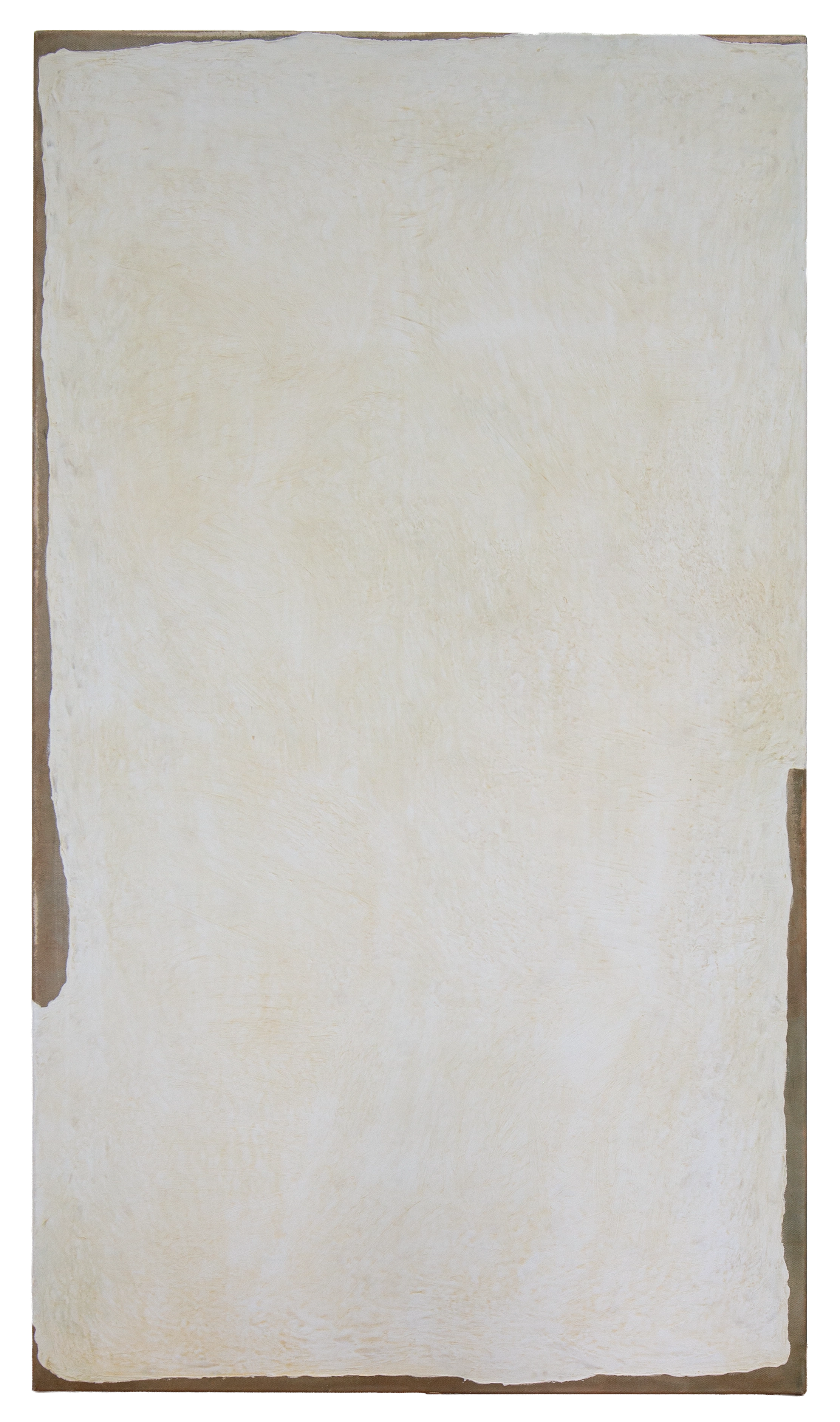
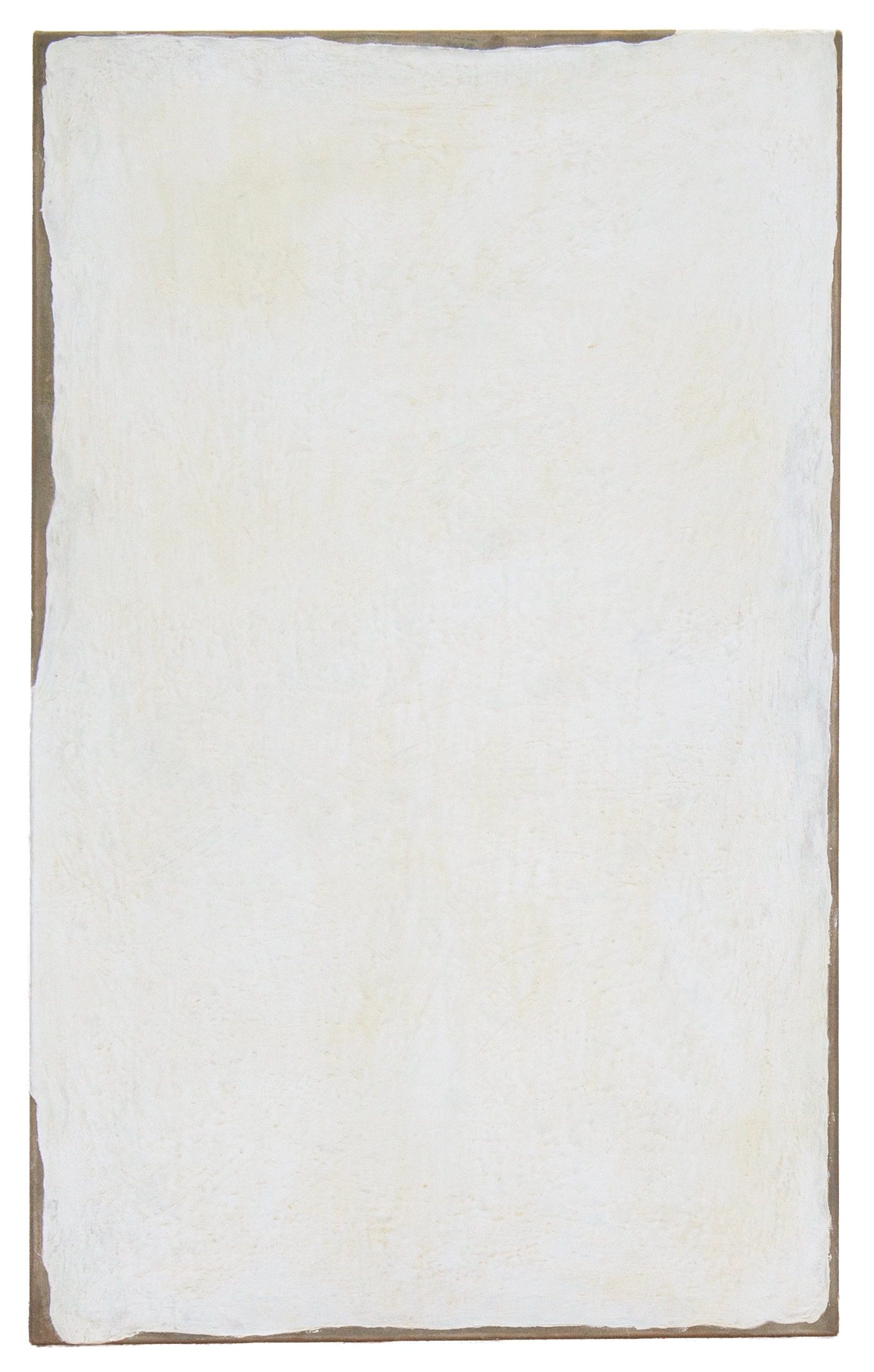
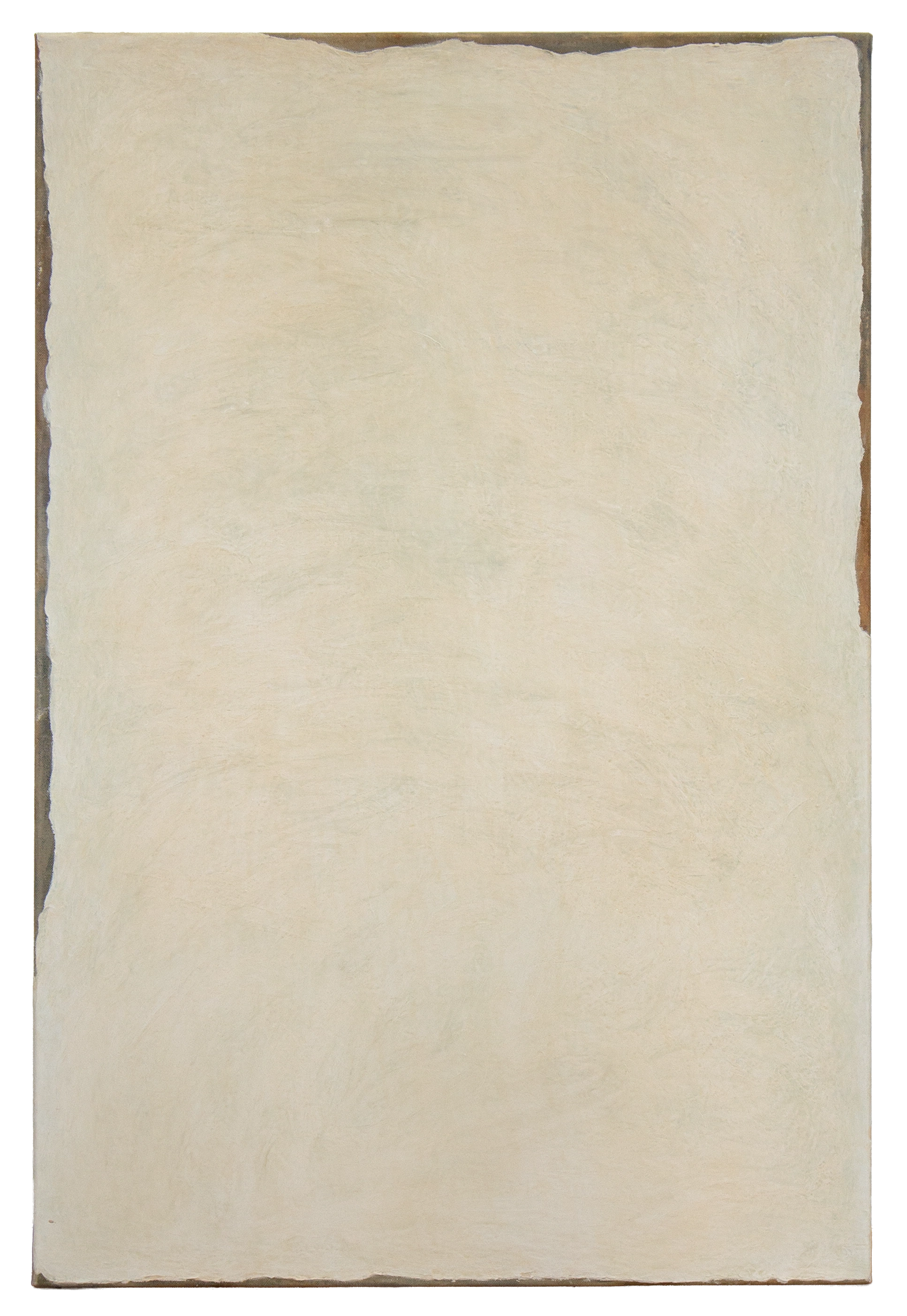
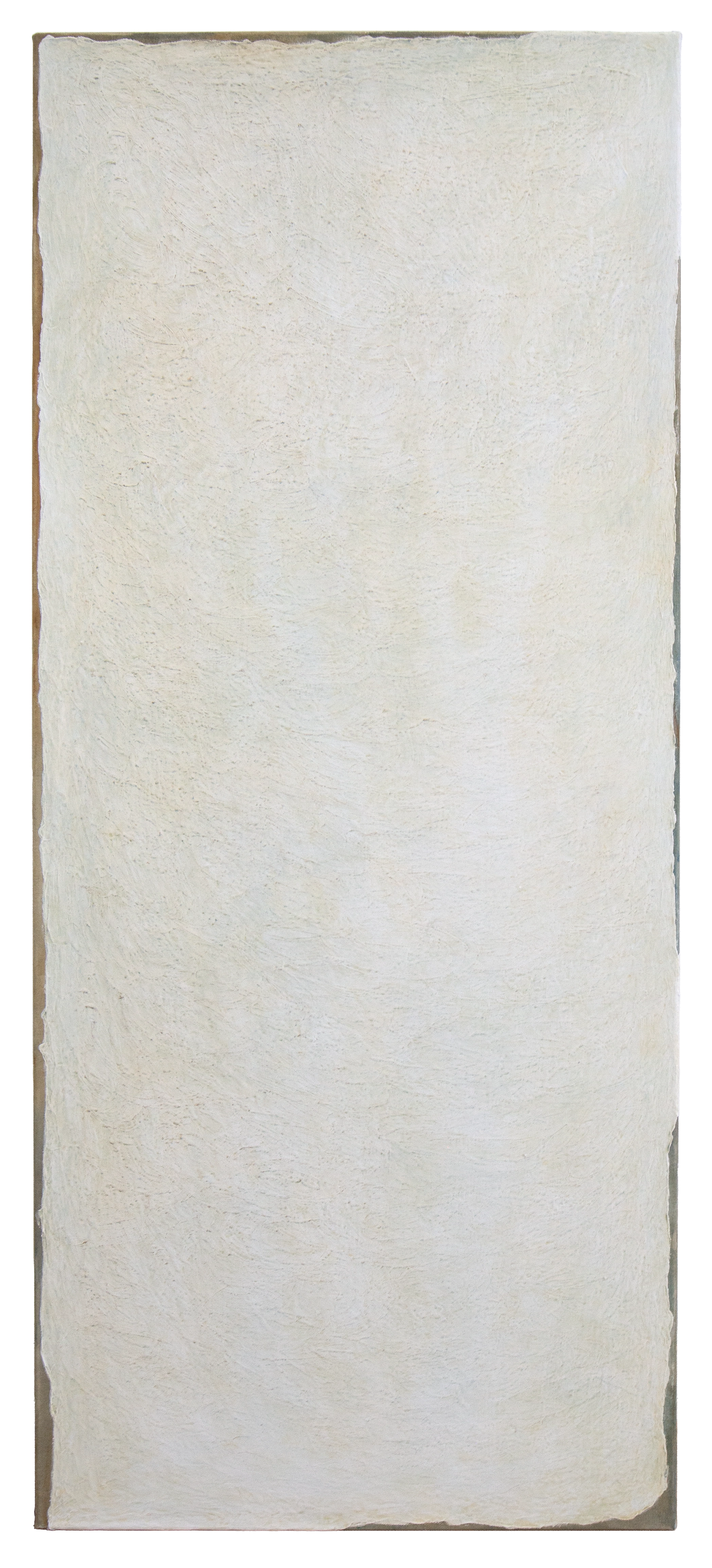
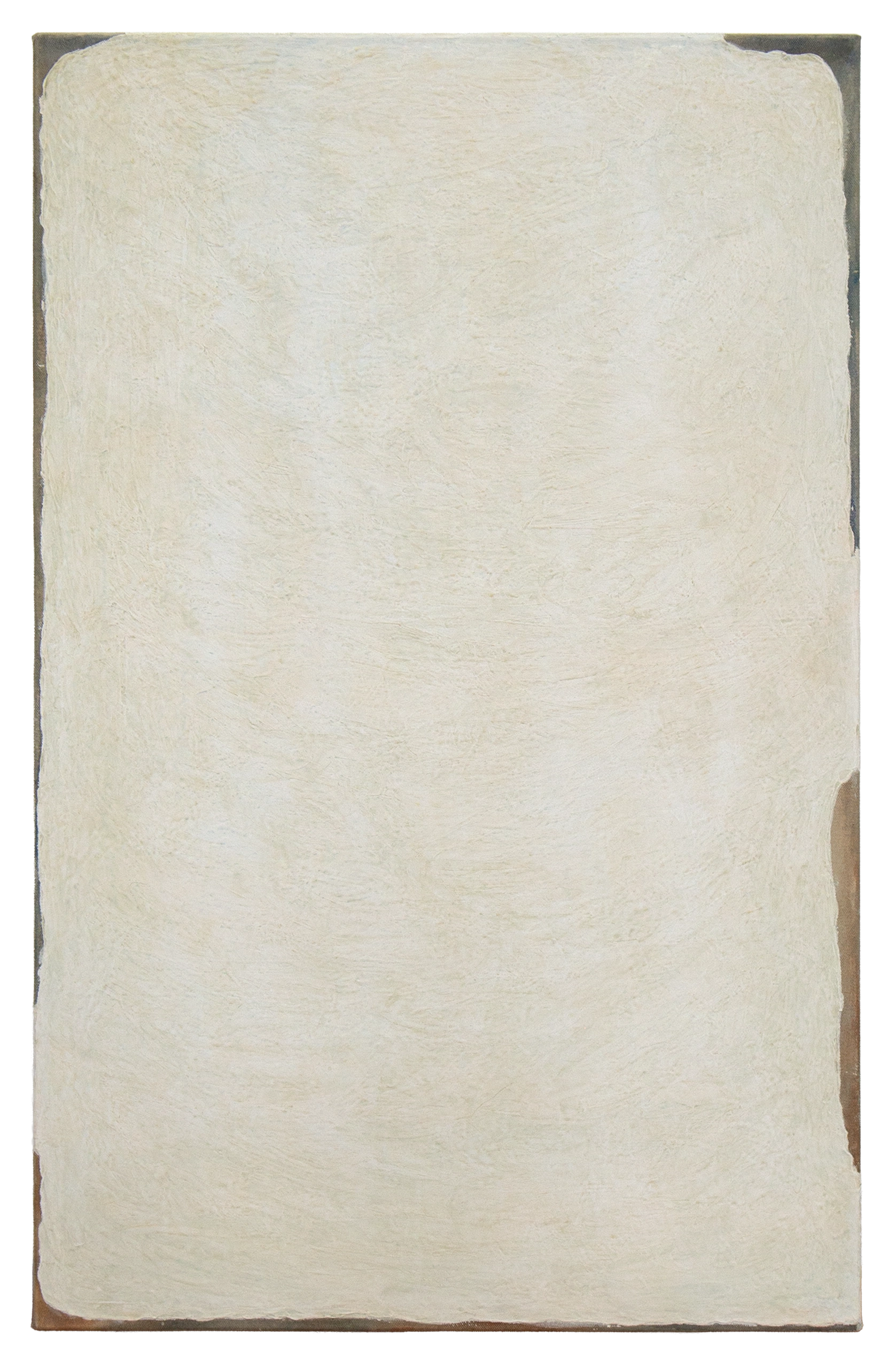
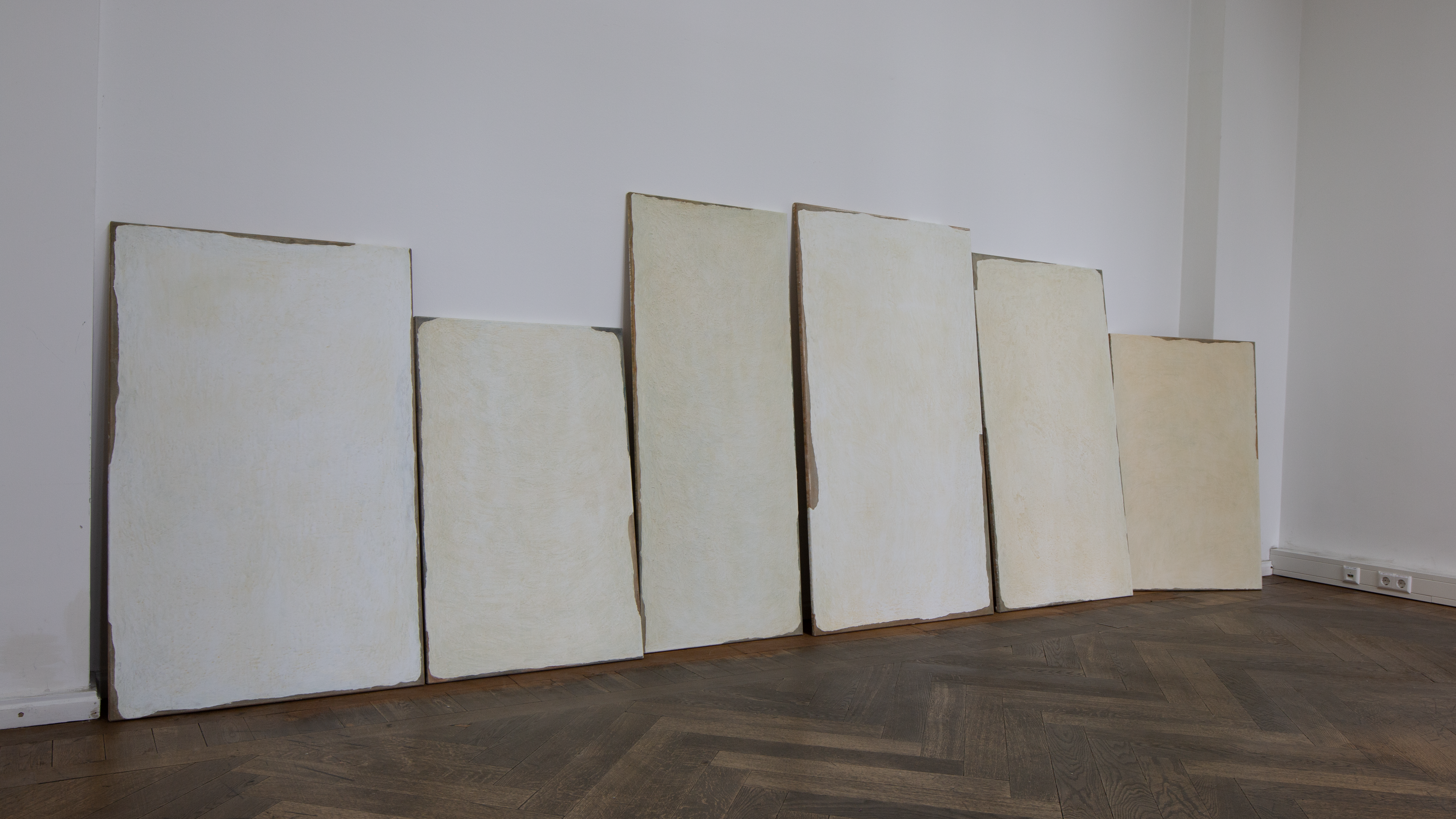
Six vertically oriented paintings held at a point of balance between the painting as a concrete object and the image that might be just about to emerge.
24 May 2025 — Grund
1, 2, 3, 4, 5, 6 картин стояли в углу мастерской. мы решали не заварить ли чаю и думали о Хоре. О Хоре как месте происхожения вещи. гнезде вещи. Grund. Если мы говорим об общем то мы не можем говорить о происхождении вообще
Можно говорить о грунте: нашем личном поиске основания, можно говорить про грунт как о техническом аспекте художественной работы, в данном случае картины. Мы можем рассказать как мы грунтовали. Сперва мы натягивали холст, забивали гвозди, варили клей и много-много клеили. Потом мы еще много-много намазывали джессо слоями, ждали пока высохнет, курили, варили кофе, ходили в магазин и гулять с Левой. Потом опять покрывали джессо и уже в самом конце на последнем слое мы начали использовать воду и заглаживали последний слой.
22 May 2025 — painting note
они все белые/ примерно/ но не совсем
они тактильные/ напоминают кожу или старую бумагу
все поверзхности картин отличаются по размеру/ тону/ фактуре/ по взаимоотношению формы темной рамки и светлого фона/
не понтно то ли они выгорели на солнце/ то ли рисунок затерли
28 July 2025 — Grund series — Dresden
Marika and Anton presented a new series of paintings titled “Grund” in Dresden. Six vertically oriented canvases, each slightly smaller than human height, are covered with an uneven layer of gesso and several layers of colored oil glaze. The gesso was applied by hand, giving the surface of each painting a distinctive texture.
“At first, we had to reflect on what a painting is in principle—ontologically. Once we arrived at a fundamental understanding, we began working with the material step by step. We chose not to go too far and stopped at a point of balance—between the painting as a concrete object and the image that might be just about to emerge. We didn’t give the paintings any titles other than their catalog numbers, so that each viewer can have their own personal experience.”
The exhibition will be on view at the Dresden Academy of Fine Arts until September 8.
#contemporarypainting #nonknowledge #poorart #ontologyofart #whitepainting #origins
Later authorial reading — Not-yet-image
A later authorised formulation reads this threshold as a state in which an image has begun to assemble but has not yet stabilised. This is a later reading, not a phrase attributed to the May 2025 notes.
This operation remains even when the geometric form disappears. In later painting the plane can be opened not by a cube, tube or cone but by fog, indeterminacy, a state in which the image seems about to appear but has not yet appeared. The means change, but the same problem remains: how to hold form at the moment of emergence, preventing it from finally closing into a sign or a stable image. Noise Index, White Mold, spatial forms and the later “fog” can therefore be understood not as separate stylistic periods but as a sequence of different instruments in the same work of opening form.